Cathie Wood, CEO of ARK Invest, predicted Wednesday that Bitcoin could trade between $750,000 and $1.2 million within five years. The call, made during a virtual investor briefing, rests on a single thesis: that institutional adoption is no longer a fringe trend but a structural shift turning the cryptocurrency into a mainstream asset class.
The number behind the number
Wood's price range isn't pulled from a chart pattern or a momentum model. She's betting that as pension funds, endowments, and corporate treasuries allocate even a sliver of their portfolios to Bitcoin, demand will outstrip supply by a wide margin. The logic is straightforward: if Bitcoin captures just a percentage of global store-of-value demand, its market cap would need to grow by an order of magnitude. $750,000 to $1.2 million is what that arithmetic spits out when you assume a slow but steady institutional drip.
ARK has been bullish on Bitcoin for years. Wood herself called it a "financial revolution" in past interviews. But this is the most specific price target she's put on the record for 2031.
Why the timing matters
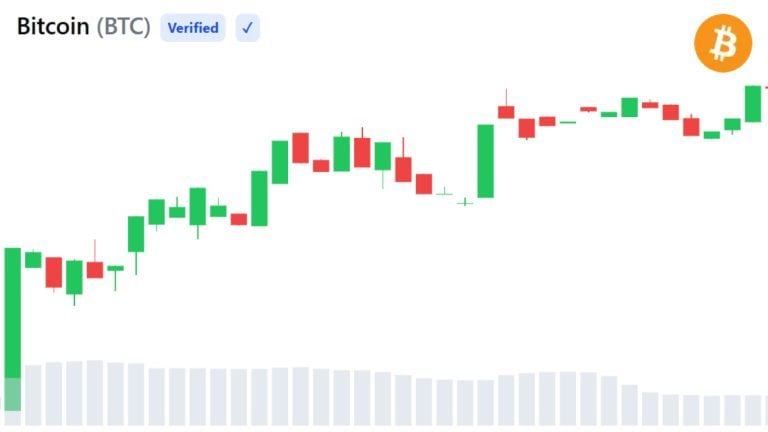
The prediction lands at a moment when Bitcoin is already hovering near all-time highs, pushed up by spot ETF inflows and a string of corporate treasury additions. Wood's five-year window implies she expects the rally to have legs — not a speculative blow-off top, but a long, grinding repricing as institutions treat Bitcoin less like a bet and more like a reserve asset.
That's a contrarian view in some corners. Critics argue that the ETF inflows are already priced in and that regulatory clarity remains patchy. Wood isn't buying it. Her forecast essentially says the market is still early — that the real institutional wave hasn't even started.
What would need to go right
For Bitcoin to hit $1.2 million, a lot of things have to break Wood's way. Regulators in the U.S. and Europe would need to keep the door open for institutional custody and trading. Sovereign wealth funds would need to wade in. And Bitcoin would need to hold its narrative as digital gold — not get displaced by a competitor or undermined by a network-level flaw.
Wood didn't address those risks in the briefing. She stuck to the upside case, which is fine for a long-term forecast. But the gap between $750,000 and $1.2 million is wide enough to suggest she knows the range is more art than science.
The next checkpoint
ARK Invest updates its Bitcoin thesis annually. The next revision is due in early 2027, and it will be the first real test of whether Wood's assumptions still hold. If institutional inflows have accelerated by then, the lower end of the range might move up. If they've stalled, the whole prediction gets harder to defend. For now, it's a bet on a world where Bitcoin becomes as boring as a bond — and as big as gold.