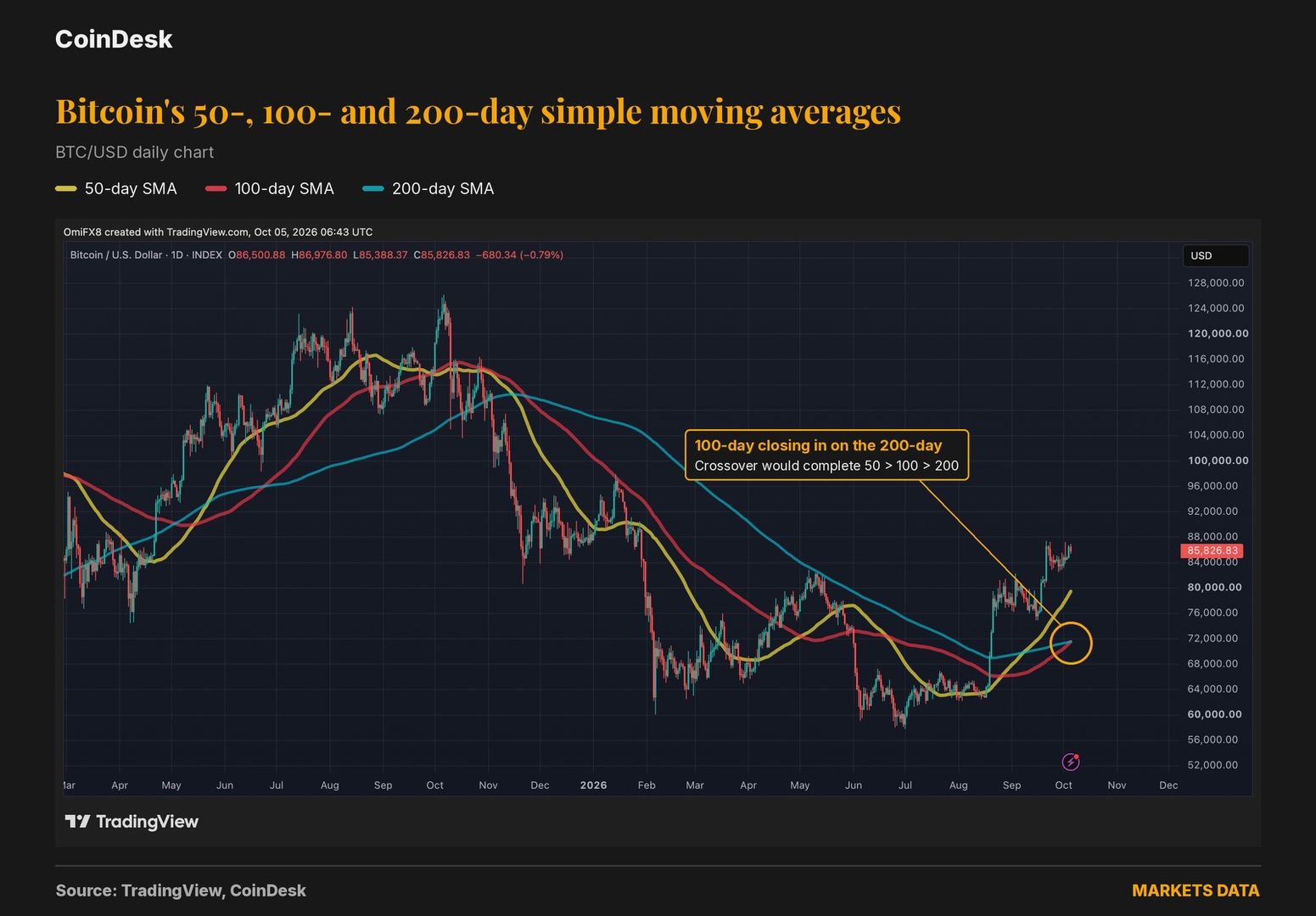
Bitcoin's derivatives market is carrying a heavy load of short positions clustered near the $90,000 level, according to a new note from on-chain analytics firm Glassnode. The company says that concentration could turn into a short squeeze if price pushes into that zone, forcing leveraged sellers to buy back and adding fuel to an already tense market.
Glassnode hasn't published a precise size for the cluster or a timeframe for when it might get tested. What it has done is flag the setup — and in crypto derivatives, that's usually enough to get traders repositioning.
Where the squeeze risk sits
Short liquidations happen when traders betting against an asset get margin-called and their positions are forcibly closed. Those closures are market buys, which is why a dense pocket of shorts can accelerate a rally rather than cap it. Glassnode's read is that the area around $90K holds enough of that kind of positioning to matter.
That doesn't mean Bitcoin has to go there. It means if it does, the move could be faster and messier than the chart alone would suggest. Liquidation clusters act a bit like tripwires: nothing happens until someone steps on them.
Why traders are watching $90K
Round numbers draw liquidity, and $90,000 is about as round as it gets. It's also close enough to current pricing that a normal session of volatility could reach it — no crash or melt-up required. That proximity is what makes the Glassnode note worth paying attention to rather than filing away.
For leveraged shorts, the math is unforgiving. If price grinds up through the cluster, exchanges start closing positions, those closures add buy pressure, and the next wave of shorts gets liquidated in turn. It's the same feedback loop that has produced some of crypto's sharpest single-day candles. Glassnode isn't predicting that outcome. It's saying the conditions exist for one.
The practical takeaway for traders is that the risk/reward around $90K is skewed. Shorting into a known liquidation cluster is a crowded trade, and crowded trades tend to end badly for the last people in. The flip side is that if Bitcoin rejects $90K and rolls over, the same cluster becomes a wall of trapped sellers who'll add to downside momentum when they cover.
Either way, volatility is the base case, not the tail case. Glassnode's report doesn't come with a directional call, and it shouldn't — liquidation maps describe pressure, not destiny.
The level to watch
What happens next depends on whether Bitcoin actually trades into the $90K band. Until then, the cluster is just a marker on a chart and a reminder that leverage cuts both ways. Glassnode's next update on liquidation heatmaps will show whether shorts are still stacking up there or quietly trimming exposure ahead of a possible test.