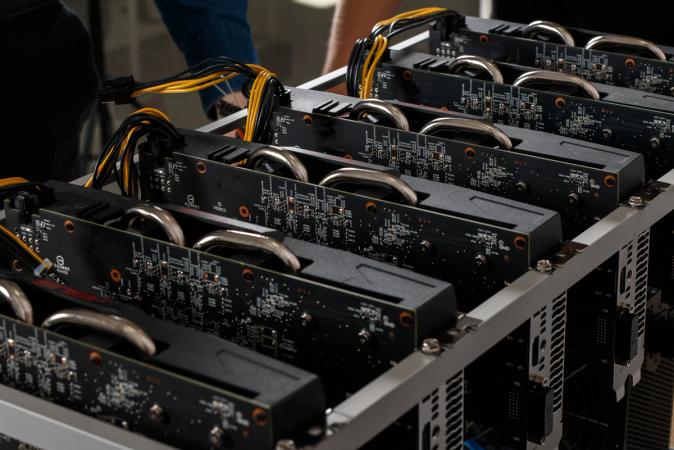
Luxor, the Bitcoin mining services and software company, has raised $16 million to expand into AI hardware and build out a trading business around computing power. The company is betting that the chips and processing capacity used to run AI models will become a market where companies can hedge both costs and prices — much the way miners already manage bitcoin exposure.
The raise lands as bitcoin miners keep redirecting machines and data-center capacity toward AI workloads, a shift that has been building for more than a year. Luxor's pitch is that the resulting scramble for compute has created a need for the same kind of risk tools that exist in other commodity markets.
The bet: compute as a tradable commodity
Luxor's argument is straightforward. AI companies need enormous amounts of processing power, and the price of that power swings hard depending on hardware supply, electricity costs, and demand for training and inference. That volatility is exactly the sort of thing that invites derivatives and hedging.
The company hasn't laid out which specific contracts or products it plans to offer, or when they might launch. What it has said is that the new capital goes toward AI hardware and trading, with the broader goal of turning computing power into a market where costs and prices can be locked in.
That's a meaningfully different direction for a firm best known for mining services. It also puts Luxor in the middle of a crowded field, since miners and data-center operators across the sector are chasing AI contracts.
Miners already moved into AI
The pivot isn't happening in a vacuum. Bitcoin miners have been retooling facilities for AI workloads as mining economics stay tight and demand for GPU capacity climbs. Luxor is effectively taking that trend one step further: rather than just hosting AI hardware, it wants to build the trading layer on top.
Whether a genuine derivatives market for compute takes hold is another question. Commodity markets need standardized units, reliable benchmarks, and enough participants on both sides to make hedging work. Compute is messier than a barrel of oil — performance varies by chip, contract terms, and how the workload is run.
Luxor is betting those problems get solved. The $16 million is meant to buy it a position before a market forms, not after.
Why miners care
For mining operators, the appeal is less abstract than it sounds. If compute becomes something you can hedge, a miner can lock in revenue from AI clients instead of riding spot rates. That's the same logic miners already apply to bitcoin itself, using futures and options to manage price risk.
For AI companies, the draw is the other side of the trade: predictable costs on processing power that has been anything but predictable. Neither side has a mature venue for that today, which is the gap Luxor is trying to fill.
The company hasn't disclosed the terms of the round, including who led it or the valuation. It also hasn't set a timeline for launching trading products.
The next concrete step is whether Luxor names partners or a product roadmap for the trading side. Until then, the $16 million buys the company runway and a thesis — that compute is the next commodity, and somebody has to build the market for it.