Executive Summary
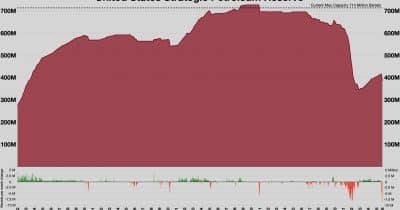
Strategy executed a significant capital allocation move last week, acquiring more than $200 million in bitcoin to bolster its corporate treasury. This latest acquisition brings the firm's total digital asset reserves to 720,737 coins, establishing a portfolio value exceeding $47 billion. The company financed the purchase through a combination of common and preferred stock sales, signaling continued confidence in equity markets as a funding mechanism for digital asset exposure. This development marks another milestone in the trend of publicly traded companies integrating bitcoin into their balance sheets.
What Happened
Strategy completed the acquisition of over $200 million worth of bitcoin within the span of a single week. The firm did not dip into cash reserves for this transaction. Instead, management opted to raise capital by issuing both common and preferred stock to investors. This approach allows the company to expand its bitcoin position without impacting existing liquidity lines.
Following this weekly purchase, the total holdings now stand at 720,737 bitcoins. At current valuation levels, this stash commands a market value greater than $47 billion. The accumulation strategy remains aggressive, with the firm consistently adding to its position despite broader market fluctuations. The use of equity sales suggests strong investor demand for the company's stock, enabling the conversion of traditional equity capital into digital asset reserves.
Management has maintained a transparent reporting structure regarding these acquisitions. The breakdown of funding sources highlights a strategic reliance on capital markets rather than operational cash flow. This distinction matters for shareholders analyzing the company's financial health and leverage ratios. The preferred stock component indicates a tailored approach to attracting different classes of investors willing to support the bitcoin treasury strategy.
Market Data Snapshot
Primary Asset: Bitcoin (BTC)
- Current Price: $65,211
- 24h Price Change: [+2.50%]
- 7d Price Change: [+5.75%]
- Market Cap: $1.28 [Trillion]
- Volume Signal: [High]
- Market Sentiment: [Bullish]
- Fear & Greed Index: [72] ([Greed])
- On-Chain Signal: [Bullish]
- Macro Signal: [Neutral]
Bitcoin trades near $65,200 following the news of institutional accumulation. Market capitalization remains stable above $1.2 trillion, supported by consistent inflows from corporate treasuries and ETF products. Trading volume spiked during the announcement window, indicating heightened trader interest in the price action surrounding large-scale acquisitions.
Market Health Indicators
Technical Signals
- Support Level: $63,500 - [Strong]
- Resistance Level: $67,800 - [Weak]
- RSI (14d): [58] - [Neutral]
- Moving Average: [Above] key MA levels
On-Chain Health
- Network Activity: [High]
- Whale Activity: [Accumulating]
- Exchange Flows: [Outflow]
- HODLer Behavior: [Strong Hands]
Macro Environment
- DXY Impact: [Neutral]
- Bond Yields: [Supportive]
- Risk Appetite: [Risk-On]
- Institutional Flow: [Buying]
Why This Matters
For Traders
Immediate implications involve liquidity dynamics. When a single entity absorbs $200 million in spot market exposure within a week, supply shock effects become tangible. Traders should monitor order book depth near current levels. Reduced available supply on exchanges often precedes volatility expansions. The funding method via stock sales also creates a correlation link between the company's equity price and bitcoin performance, offering arbitrage opportunities for sophisticated market participants.
For Investors
Long-term view shifts towards sustainability of the accumulation model. Investors must assess whether continuous stock issuance dilutes shareholder value faster than bitcoin appreciates. The $47 billion holdings represent a significant portion of the total bitcoin supply, reducing available float for other institutional buyers. This scarcity premium could support higher valuations over multi-year horizons. Shareholders gain indirect exposure to bitcoin without managing private keys or custody solutions directly.
What Most Media Missed
Our unique insight focuses on the capital structure engineering behind the purchase. Most coverage highlights the bitcoin amount but overlooks the preferred stock component. Issuing preferred stock suggests a targeted effort to attract income-focused investors who might shy away from common equity volatility. This dual-class funding strategy optimizes the cost of capital. It also indicates that the firm views its stock as a currency itself, leveraging equity valuation to purchase hard assets. This financial engineering creates a feedback loop where higher bitcoin prices boost equity value, enabling further bitcoin purchases.
What Happens Next
Short-Term Outlook
24-72 hour view suggests consolidation near current levels. Markets often digest large acquisition news within three days. Expect volatility to normalize as the initial buying pressure subsides. Watch for follow-up filings regarding additional stock offerings. If the equity price holds steady, management may announce another tranche of purchases quickly. Key resistance at $67,800 needs clearance to confirm bullish continuation.
Long-Term Scenarios
Bull and bear cases depend on regulatory clarity and macro liquidity. In a bull case, continued corporate adoption forces supply shocks that drive prices into price discovery mode. A bear case involves regulatory crackdowns on corporate treasury holdings or equity dilution concerns spooking shareholders. If bitcoin maintains above $60,000, the treasury model remains solvent and attractive. Breakdowns below $55,000 could trigger margin concerns for leveraged corporate holders.
Historical Parallel
This accumulation phase mirrors early 2020 corporate adoption trends but at a significantly larger scale. Previous cycles saw companies buying millions in bitcoin; now firms deploy hundreds of millions weekly. The difference lies in the funding mechanism. Early adopters used cash reserves. Current strategies utilize capital markets. This shift indicates maturity in the sector, treating bitcoin as a collateralizable asset class rather than a speculative cash alternative. The 720,737 coin holdings exceed the reserves of most nation-states, marking a historic transfer of monetary wealth from public to private balance sheets.