Bitcoin is trading near $63,600, below the lowest price tested in a new study that models a wind-powered mining operation. Researchers at Technological University of the Shannon found that a 20 MW Bitcoin mine paired with a 100 MW wind farm doesn't pay back its investment within six years if Bitcoin stays at or below €60,000. Even with 25% curtailment, the project never reaches breakeven at that price.
The payback math
The study, based on 2024 hourly market data, ran scenarios at €60,000, €80,000, and €100,000 per Bitcoin. At €100,000, the mine pays back in 2.13 to 3.56 years, depending on how much wind power is curtailed. At €80,000, it only works with heavy curtailment—25% gives a 3.44-year payback, 20% gives 4.07 years. At €60,000, no curtailment level from 5% to 25% produces a positive return.
The researchers also tested whether Bitcoin price growth could keep up with hashrate growth. If both grow at the same rate, the net present value is negative €10.1 million. The project only turns profitable if Bitcoin growth outpaces hashrate growth by a wide margin—for example, 30% price growth against 15% hashrate growth yields a positive NPV of €7.7 million.
Hardware and hashrate reality
Not all mining rigs work in these scenarios. The older Antminer S9 is uneconomic; only the newer Antminer S21 Hydro, with an efficiency of 16 J/TH, makes the viable cases work. That's a high bar for a small operation.
The study assumed a global hashrate of 780 EH/s, but the current seven-day average sits around 911 EH/s. More hashrate means more competition for the same block rewards, which pushes hashprice down. Right now hashprice is $31.73 per petahash, at or below breakeven for many miners. The study's already tight numbers look even tighter with that backdrop.
Miners are already pivoting
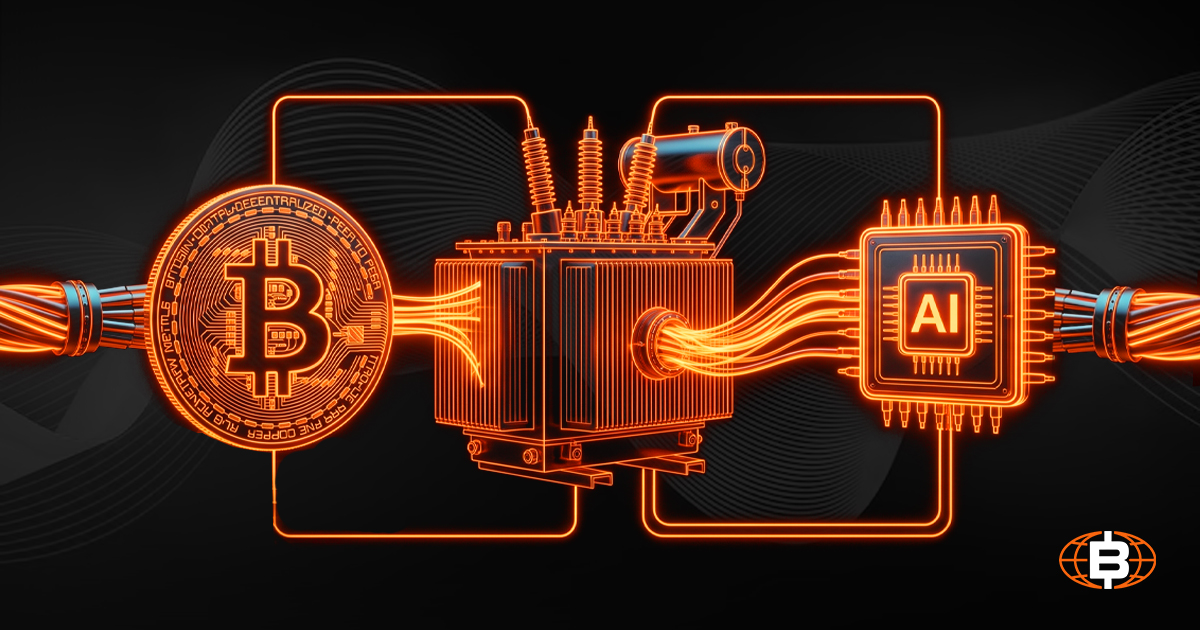
Some miners aren't waiting for Bitcoin to climb. Riot Platforms signed a 20-year lease with an AI lab for 191 MW of capacity at its Rockdale facility, a deal worth an estimated $9.1 billion. That's a clear sign that the economics of pure Bitcoin mining, even with cheap wind power, are pushing operators toward other revenue streams.
The study's authors used 2024 data, but the hashrate has already blown past their assumption. Unless Bitcoin growth decisively outpaces the network's computing power, the wind-and-mine model looks like a tough sell.