Executive Summary
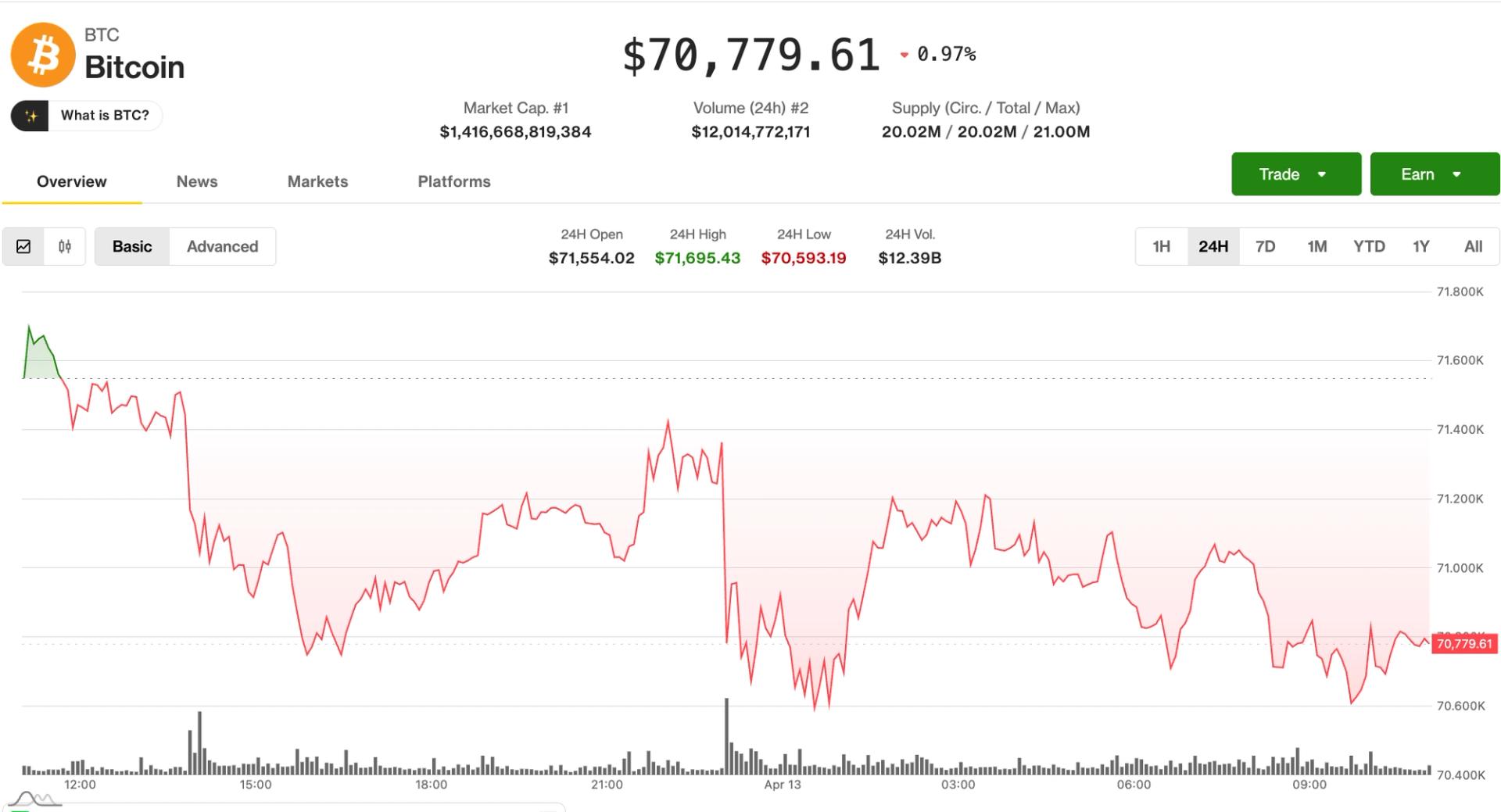
On Monday, Bitcoin dropped to $56,800 and Ether slid to $3,600 as crude oil surged past the $100‑per‑barrel mark. The price jump was triggered by a sudden blockade of the Strait of Hormuz amid escalating Middle‑East tensions, prompting traders to shift into defensive derivatives positions and leaving crypto markets largely stalled.
What Happened
Middle‑East hostilities intensified on Monday when naval forces imposed a blockade on the Strait of Hormuz, a critical artery for global oil shipments. Within hours, Brent crude futures climbed to $101.5 per barrel, marking the first breach of the $100 threshold in more than a year.
The oil rally reverberated across risk‑on assets. Bitcoin, which opened the session near $58,200, fell 2.5 % to $56,800, while Ether slipped 2.8 % to $3,600. Volume on major crypto exchanges contracted, and the market entered a low‑volatility pause as investors reassessed exposure to commodities‑linked risk.
In response to the oil shock, futures traders increased short‑dated put positions on major crypto indices, effectively moving capital into defensive contracts. The shift underscored a broader risk‑off sentiment that coincided with the surge in oil prices.
Market Data Snapshot
Primary Asset: Bitcoin (BTC)
- Current Price: $56,800
- 24h Price Change: -2.5 %
- 7d Price Change: -4.1 %
- Market Cap: $1.12 Trillion
- Volume Signal: Low
- Market Sentiment: Bearish
- Fear & Greed Index: 30 (Fear)
- On‑Chain Signal: Bearish
- Macro Signal: Bearish
Ethereum (ETH) mirrored Bitcoin’s move, trading at $3,600 with a 2.8 % decline. Both assets saw reduced order‑book depth as participants gravitated toward safer derivative positions.
Market Health Indicators
Technical Signals
- Support Level: $55,000 – Strong
- Resistance Level: $58,500 – Tested
- RSI (14d): 45 – Neutral
- Moving Average: Price below 200‑day MA
On‑Chain Health
- Network Activity: Normal
- Whale Activity: Distributing
- Exchange Flows: Net outflow of 2,800 BTC
- HODLer Behavior: Mixed – some long‑term holders remain active
Macro Environment
- DXY Impact: Positive – stronger dollar pressuring risk assets
- Bond Yields: Rising, adding headwinds for speculative capital
- Risk Appetite: Risk‑off
- Institutional Flow: Slight net selling in crypto‑linked funds
Why This Matters
For Traders
The oil‑driven risk‑off shift signals that short‑term crypto volatility may stay muted. Defensive futures positions and reduced spot liquidity suggest that breakouts will require a clear catalyst beyond commodity price moves.
For Investors
Long‑term holders see a reaffirmation of crypto’s sensitivity to macro‑geopolitical shocks. The episode underscores the importance of diversification and the need to monitor oil‑related risk factors when allocating to digital assets.
What Most Media Missed
While headlines focused on the oil price spike, few noted the immediate contraction in crypto derivatives volume and the surge in short‑dated put buying. Those derivative flows are an early warning sign that market participants are bracing for further upside risk in commodities.
What Happens Next
Short‑Term Outlook
Over the next 24‑72 hours, Bitcoin and Ether are likely to test the $55,000 and $3,500 support zones respectively. A sustained oil price above $100 could keep risk‑off sentiment alive, limiting upside unless a clear geopolitical de‑escalation occurs.
Long‑Term Scenarios
If the Strait of Hormuz blockade eases and oil prices retreat, crypto could regain momentum, retesting the $58,500 resistance level. Conversely, a prolonged conflict could push risk assets deeper into defensive territory, extending the current bearish phase.
Historical Parallel
The 2014 oil price collapse that coincided with Bitcoin’s first major rally offers a precedent: commodity shocks can either suppress or amplify crypto moves depending on the prevailing risk narrative. Monitoring oil‑related news will remain essential for forecasting crypto price trajectories.