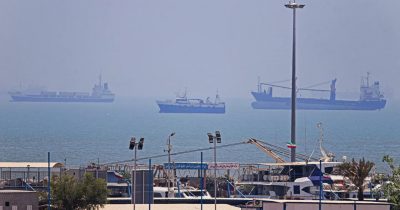
President Donald Trump said US strikes hit Iran in honor of American soldiers killed, triggering Iranian retaliation in Syria and Jordan and reports of two ship explosions in the Strait of Hormuz. Bitcoin, however, barely budged — trading at $64,503, down just 0.3% over the past week. The Fear & Greed index sits at 26, deep in 'Fear' territory, but the price action tells a different story.
Strait of Hormuz explosions rattle oil markets
The reported explosions in the Strait of Hormuz — a chokepoint for about 20% of global oil supply — introduce immediate supply disruption risk. Oil prices are expected to spike, stoking inflation fears and triggering a risk-off rotation across global markets. Crypto typically sells off in such moments as traders liquidate risk positions. But this time, the selloff has been muted.
📊 Market Data Snapshot
Bitcoin's 0.3% drop masks a deeper signal
A 0.3% weekly decline in the face of a major geopolitical escalation is unusual. Historically, similar shocks have pushed Bitcoin down 5-10% in a day. The fact that BTC is holding $64,500 suggests strong underlying demand. The Fear & Greed index at 26 — extreme fear — often coincides with local bottoms. Whales appear to be accumulating, not dumping.
Why whales might be buying the dip
The divergence between fear sentiment and price stability points to accumulation by large holders. When retail panics, smart money steps in. The Strait of Hormuz incident, while serious, may be seen as a buying opportunity for those who view Bitcoin as a non-sovereign store of value. If the conflict escalates, Bitcoin could rally above $66,000 as investors flee fiat. If it de-escalates, the dip buyers win either way.
The mining vulnerability most media missed
One overlooked factor: a significant portion of Bitcoin's global hash rate relies on cheap natural gas and oil byproducts from the Middle East. A sustained disruption in the Strait of Hormuz could spike energy costs, forcing miners to shut down or relocate. That would reduce hash rate and potentially delay the next difficulty adjustment, affecting block times and miner profitability. This supply-side shock could add another layer of volatility.
Traders are now watching for a break below $63,000 as a bearish signal or a reclaim of $66,000 as bullish. With the situation fluid and the weekend ahead, liquidity is thin — meaning any move could be amplified. The market is waiting for confirmation on the ship explosions and any further statements from the White House or Tehran.