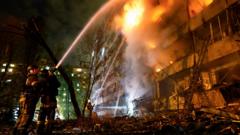
Ukrainian drones struck St. Petersburg on Thursday, sending plumes of smoke over the city as the St. Petersburg International Economic Forum (SPIEF) was underway. The attack, which targeted the heart of Russia’s second-largest city, underscores growing security gaps that could spook foreign investors already wary of the country’s stability.
Why the timing matters
SPIEF is Russia’s flagship event for wooing international capital. This year’s edition, held in 2026, was meant to showcase Moscow’s resilience after years of sanctions and war. Instead, the drone strikes turned the forum into a live demonstration of vulnerability. Images from the scene showed black smoke rising near the convention center, though authorities did not confirm casualties or damage to the venue itself.
The incident is a fresh blow to Kremlin efforts to project normalcy. For years, SPIEF has served as a stage for grand investment pledges and photo opportunities with global business leaders. That narrative now collides with the reality of an active drone campaign reaching deep into Russian territory.
Investor confidence on shaky ground
Foreign investors have been pulling back from Russia since the full-scale invasion of Ukraine began in 2022. The drone strikes risk accelerating that trend. Even before Thursday, Western companies faced reputational risks and logistical hurdles to doing business in Russia. Now, the prospect of air attacks on key economic hubs adds a direct security cost to the already heavy compliance burden.
Market analysts tracking capital flows say the strike could freeze any remaining appetite for Russian assets. One trader quoted in a financial wire described the attack as “a reminder that nowhere is safe.” That sentiment, if it spreads, could make it harder for Russia to attract the foreign technology and financing it relies on to offset sanctions.
Russia’s air defense gaps exposed
St. Petersburg lies about 1,000 kilometers from the Ukrainian border, within range of modified attack drones but still far from the front lines. The fact that Ukrainian drones reached the city — and hit during a high-profile state event — suggests Russia’s air defense network has serious holes. Military bloggers in Russia acknowledged the failure, with some calling for an overhaul of protective systems around critical infrastructure.
Russian officials dismissed the incident as a propaganda stunt and claimed most drones were shot down before reaching the city. But the smoke visible at SPIEF told a different story to the international business community gathered there. For many delegates, the question is no longer whether Russia can win the war — but whether it can protect its own cities from attack.
The strikes also come at a delicate time for Russia’s defense industry, which is struggling to produce enough advanced interceptors to cover both the front lines and urban centers. The balancing act grows harder as Ukraine expands its drone arsenal and range.
What’s next
SPIEF organizers did not cancel the forum, but security was visibly tightened after the strikes. The Russian government is expected to brief foreign investors on new protective measures in the coming days. Yet the damage to perception may already be done. The next edition of SPIEF, scheduled for 2027, now faces the challenge of selling a safe investment environment in a city that just got hit by drones.