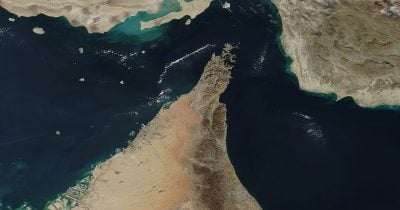
Explosions were reported near the Strait of Hormuz in southern Iran on Tuesday as the country activated its air defense systems. The incident adds fresh uncertainty to one of the world’s most critical maritime chokepoints, through which roughly a fifth of global oil supply moves daily.
What set off the air defenses
Iranian state media confirmed the activation of air defenses after what they described as “loud explosions” in the vicinity of Bandar Abbas, a port city that overlooks the strait. Initial reports did not specify the source of the blasts or whether they came from incoming fire, a military exercise, or an accident. No casualties or damage have been officially reported, and Iranian authorities said an investigation is underway.
The timing of the incident matters. Iran has been on heightened military alert in recent weeks amid ongoing tensions with Israel and the United States over its nuclear program. The Strait of Hormuz has long been a flashpoint; Iran has threatened to close the waterway in past confrontations, and the U.S. Navy’s Fifth Fleet keeps a permanent presence there.
Why the Strait of Hormuz matters
At its narrowest point, the strait is only 33 kilometers wide. Tankers carrying crude from Saudi Arabia, Iraq, Kuwait, the United Arab Emirates, and Iran itself must pass through it to reach open ocean. Any disruption—whether from military action, mines, or political brinkmanship—can send tremors through global energy markets.
The waterway saw its last major traffic interruption during the Iran-Iraq war in the 1980s, but the risk remains ever-present. The International Energy Agency has repeatedly warned that a prolonged closure would cut oil supply by millions of barrels a day, pushing prices well above levels most economies can handle.
Oil markets on edge
Brent crude futures edged higher within hours of the news, though the move was modest as traders waited for more clarity. If Iran’s investigation points to an external attack—or if the country retaliates in some way—the price reaction could intensify quickly. Energy analysts not named in the facts say that the market is already factoring in a risk premium for Middle East tensions, but a direct incident at the strait would escalate that calculus.
For now, shipping through the strait continues normally. But the fact that Iran’s air defenses went live is a signal that the country’s military is on a hair trigger. The coming days will show whether this was an isolated, accidental event or something that forces a broader recalculation of security in the Gulf.