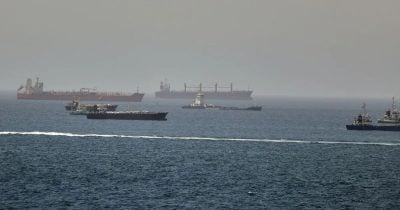
France is planning a joint mission with Iran aimed at securing the strategic Strait of Hormuz, a move that could ease regional tensions and reduce the risk of military conflict. The mission, detailed by French officials this week, represents a rare diplomatic push between a Western power and Tehran to stabilize one of the world's most critical oil transit chokepoints.
Why the Strait Matters
Nearly a fifth of the world's oil passes through the narrow Strait of Hormuz, connecting the Persian Gulf to the Gulf of Oman. Any disruption there sends shockwaves through global energy markets. In recent years, the waterway has seen a series of confrontations — tanker seizures, drone attacks, and mine incidents — that have kept shipping companies on edge and raised the specter of a broader military escalation.
What the Mission Would Look Like
Details of the planned operation remain scarce, but the idea is for French and Iranian naval forces to coordinate patrols and monitoring in the strait. The mission's backers hope it will normalize traffic through the waterway, which has been subject to periodic interference by both state and non-state actors. France has maintained a naval presence in the region for years, often as part of European or U.S.-led coalitions. Teaming up with Iran would be a significant shift in approach, one that requires trust on both sides.
Potential Impact on Regional Dynamics
If the mission moves forward, it could ease the kind of tit-for-tat escalations that have defined the strait in recent years. Iran has previously threatened to close the waterway in response to sanctions or military pressure. A joint security arrangement might give Tehran a face-saving way to de-escalate while still asserting its role as a regional power. For France, it's a chance to prove that diplomacy can work where military posturing hasn't. The mission could also reduce the risk of accidental clashes between Iranian forces and Western navies.
But the plan faces plenty of hurdles. Iran's relationship with the West remains deeply strained, and any cooperation will be scrutinized by hardliners on both sides. The U.S., which has its own tensions with Iran, was not mentioned in the French announcement, and it's unclear whether Washington would support or oppose the arrangement. Meanwhile, other Gulf states — Saudi Arabia, the UAE, and Oman — have their own security concerns in the strait and may want a seat at the table.
What comes next is anyone's guess. The mission is still in the planning phase, and no timeline has been given for when joint patrols might start. Whether it actually calms the waters — or just adds another layer of complexity — remains an open question.