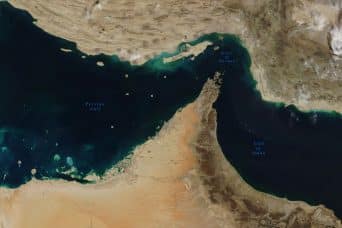
Two ports on the UAE's eastern coast are seeing a surge in shipping activity as regional trade routes shift in response to ongoing tensions with Iran. Fujairah and Khor Fakkan, both located on the Gulf of Oman outside the Strait of Hormuz, have become increasingly important hubs for cargo and energy exports. Their deeper waters and direct access to the Arabian Sea offer an alternative to the crowded and vulnerable chokepoint that Iran has repeatedly threatened to close.
A Bypass Route for the Strait of Hormuz
The Strait of Hormuz handles roughly a fifth of the world's oil shipments, making it a natural pressure point in any confrontation between Tehran and its neighbors. When Iranian forces harass commercial vessels or hold drills near the strait, shipping lines scramble for safer options. Fujairah sits just 70 nautical miles south of the strait but outside its narrowest passage, meaning tankers and container ships can load and unload without entering what many insurers now consider a high-risk zone. Khor Fakkan, a deepwater container terminal on the east coast of the Sharjah emirate, offers similar advantages for boxed cargo headed to and from Asia. The two ports together provide a buffer against supply chain disruptions that have spiked in recent years.
Infrastructure Upgrades and Rising Throughput
Fujairah already ranks among the world's top bunkering hubs, supplying fuel to thousands of ships each year. Its oil terminal handles crude exports from the UAE's eastern fields and has expanded storage capacity to accommodate growing demand. The port authority recently completed a dredging project that allows very large crude carriers to berth at all tides. Khor Fakkan, meanwhile, has invested in new gantry cranes and expanded its container yard, aiming to capture transshipment traffic that might otherwise go to Jebel Ali or Salalah. Shipping lines have responded by diverting some services to these eastern ports. Throughput numbers are not publicly available for all terminals, but industry sources indicate double-digit growth in container volumes at Khor Fakkan over the past two years, while Fujairah's bunker sales have climbed steadily.
Geopolitical Calculus Driving Trade Patterns
The UAE has long positioned itself as a neutral trade hub, but the Iran tensions force a delicate balancing act. Abu Dhabi maintains diplomatic channels with Tehran while also cooperating with US-led maritime security patrols in the Gulf. The shift toward Fujairah and Khor Fakkan reflects a practical hedge: keep the main business in Dubai and Abu Dhabi, but ensure that alternative routes exist if the Strait of Hormuz becomes impassable. That calculus has only sharpened since the Houthi attacks in the Red Sea and the broader regional instability that followed. For now, the two ports are clear beneficiaries of a volatile neighborhood, but their long-term prospects hinge on whether the security threats persist or fade.