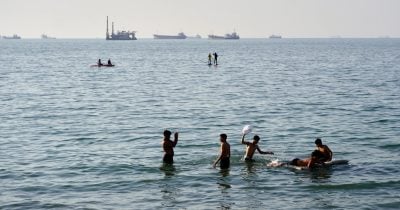
The Group of Seven wealthy democracies on Wednesday again warned against any unilateral moves that could alter the status quo in the Taiwan Strait. In a joint statement, the G7 foreign ministers said stability in the waterway is essential for global tech supply chains and broader geopolitical balance.
Why the G7 spoke now
The statement comes as cross-strait tensions remain high. Beijing has ramped up military drills near Taiwan in recent months, while Taipei and Washington have deepened security cooperation. The G7's language — reaffirming opposition to unilateral changes — mirrors earlier communiqués but carries fresh weight given the current climate. The bloc includes the United States, Japan, Germany, Britain, France, Italy and Canada.
These countries have not specified what actions they consider unacceptable. But the message is clear: any attempt to redraw the strait's boundaries by force or coercion would be met with a coordinated response.
What's at stake for global tech
The Taiwan Strait is a chokepoint for semiconductor production. Taiwan makes roughly 60% of the world's advanced chips, and TSMC, the island's largest manufacturer, supplies clients including Apple, Nvidia and Qualcomm. A disruption in the strait could halt shipments, spike prices and ripple through industries from smartphones to military hardware.
That is why the G7 framed the strait's stability as a matter of tech-market security, not just diplomacy. The statement did not name specific companies or sectors, but the economic logic is embedded in the region's supply chains. Japan and South Korea, both tied to Taiwanese chip output, have their own stakes in the matter.
Geopolitical equilibrium hangs in the balance
Beyond semiconductors, the strait has long served as a line of demarcation between Chinese and American spheres of influence. Any unilateral shift — whether by Beijing or Taipei — could trigger a broader crisis. The G7's reaffirmation signals that the group sees the current equilibrium as fragile but worth preserving.
China's foreign ministry responded by reiterating that Taiwan is an inalienable part of China and urging outside powers to stop interfering. No new sanctions or military deployments were announced on either side. The standoff, for now, remains rhetorical.
The next concrete test will come later this month when G7 leaders meet for their annual summit. Taiwan Strait language is expected to feature in the final communiqué. Whether that language includes new measures or merely restates old positions remains an open question.