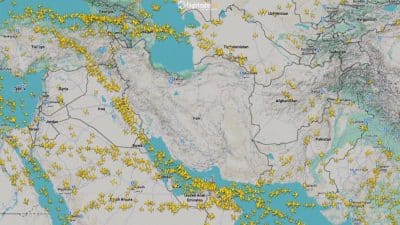
Iran has formally requested China's help in mediating the escalating conflict with the United States over the Strait of Hormuz, a move that could reshape diplomatic jockeying in the Middle East. The request, confirmed by multiple diplomatic sources, comes as tensions in the strategic waterway threaten to disrupt global oil shipments.
Why Iran turned to Beijing
Tehran's decision to seek Chinese mediation reflects a broader strategy to counter US pressure without direct military confrontation. The Strait of Hormuz, a narrow passage through which about a fifth of the world's oil passes, has become a flashpoint in recent months. Iran has repeatedly warned it could block the strait if its own oil exports are choked off by US sanctions. By bringing in China, a major buyer of Iranian crude and a rival to American influence, Iran hopes to create a diplomatic buffer.
Chinese officials haven't publicly responded to the request, but Beijing has long positioned itself as a neutral broker in regional disputes. Any Chinese involvement would mark a significant step in its efforts to project power beyond its immediate neighborhood.
What China's involvement could mean
If China agrees to mediate, it could alter the diplomatic balance in the region. Washington has historically dominated security arrangements in the Persian Gulf, but Beijing's entry could offer Tehran an alternative channel. For China, the calculus is straightforward: stable oil flows support its economy, and a war in the strait would spike prices and hurt growth. Mediation could help keep the strait open while burnishing China's image as a responsible global actor.
But mediation carries risks. The US has not signaled any willingness to ease pressure on Iran, and any Chinese-brokered deal would need buy-in from Washington. China's own relationship with the US is already strained over trade and technology disputes, making a joint effort unlikely in the short term.
The role of US policy
US policy remains the wild card. The Biden administration has maintained a tough line on Iran, insisting on strict nuclear compliance before any sanctions relief. The Strait of Hormuz issue is tangled up with that broader standoff. Without a shift in Washington's stance, Chinese mediation might only produce talks about talks.
Some analysts inside the State Department have privately noted that a third-party mediator could be useful, but only if it's seen as impartial. China's close economic ties to Iran — it's Tehran's top oil customer — raise questions about its neutrality. Still, the US has not ruled out engaging with Beijing on this front.
Impact on global oil markets
Oil markets have already started pricing in the risk of a supply disruption. Brent crude has been volatile, with traders watching every development in the strait. A successful mediation that lowers tensions would almost certainly push prices down. But any sign that talks are failing — or that China is siding with Iran — could send them back up.
The International Energy Agency has warned that a prolonged closure of the Strait of Hormuz would strain global supplies, especially for Asian economies that rely heavily on Gulf crude. Japan, South Korea, and India are watching the diplomatic moves closely.
For now, the ball is in Beijing's court. Will China take on the role of mediator, or will it stay on the sidelines? The answer could determine whether the strait stays open — or becomes the next flashpoint in the US-Iran standoff.