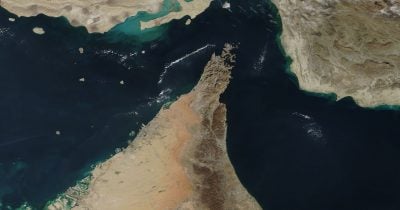
The Strait of Hormuz is closed. Iran's ongoing conflict has shut the narrow waterway, a chokepoint for roughly a fifth of the world's oil. The result: global supply has dropped by 12.8 million barrels each day — the biggest single disruption in decades.
Why the Strait Matters
Every day, tankers carry about 17 million barrels of crude and petroleum products through the strait. That's more than the entire production of Saudi Arabia and Iraq combined. The strait connects Persian Gulf producers — Iran, Iraq, Kuwait, Saudi Arabia, Qatar, the UAE — to markets in Asia, Europe, and North America. No other route offers a practical alternative. A closure means those barrels simply stop flowing.
Iran's conflict — the details of which remain fluid — prompted the shutdown. The strait is only 33 kilometers wide at its narrowest point. Two shipping lanes, each three kilometers wide, are the only way in and out. Any military action in or near those lanes forces a halt. This time, the halt is total.
What the Drop Means for Supply
The 12.8 million barrel-per-day reduction represents about 13% of global oil consumption. To put that in context, the entire world produces roughly 100 million barrels a day. Losing more than an eighth of that overnight is unprecedented in peacetime. The last comparable event was the 1990 Gulf War, when Iraq and Kuwait both stopped exports. That cut about 4.3 million barrels a day — less than a third of today's loss.
Iran's own exports, already under sanctions, account for a fraction of the total. The bigger hit comes from Saudi Arabia, Iraq, Kuwait, and the UAE, all of which rely on the strait to ship their oil. Together they export around 15 million barrels daily through the chokepoint. Some of that can be diverted to pipelines — but not enough. The Saudi East-West pipeline can carry 5 million barrels a day. The UAE's Abu Dhabi Crude Oil Pipeline can handle 1.5 million. That still leaves more than 8.5 million barrels stranded.
Impact on Prices and Markets
Oil prices have already spiked. On the first day of the closure, Brent crude jumped more than 20%. Futures markets are pricing in continued volatility. Governments are scrambling to assess strategic reserves. The U.S. Strategic Petroleum Reserve holds about 700 million barrels. Japan, South Korea, and European nations have their own stockpiles. But those reserves are meant to cover weeks, not months. A prolonged closure would drain them fast.
The International Energy Agency has called an emergency meeting. Its members are required to hold 90 days of net imports. That's a cushion, but not a solution. If the strait stays shut for more than a few weeks, rationing becomes a real possibility. No country has ever tested its strategic reserves under a full strait closure.
What Happens Next
Negotiations are underway but no timeline has been announced. The strait remains closed until further notice. Tankers are anchored outside the chokepoint, waiting. Some have diverted to alternative routes, adding weeks to voyages. Insurance premiums for vessels near the strait have soared. Shipping companies are rerouting around Africa's Cape of Good Hope, adding 10 days and millions of dollars to each trip.
The conflict shows no signs of de-escalation. The next milestones will be the IEA's emergency meeting outcome and any diplomatic breakthrough. For now, the world is running on the oil it already has. Every day the strait stays closed, the margin for error shrinks.