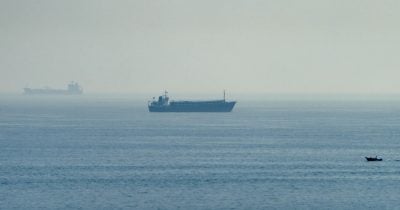
Iran has begun restricting Persian Gulf access for vessels it labels hostile, a direct escalation in its standoff with the United States that could send shockwaves through global oil markets and further strain diplomatic ties. The move, reported as tensions with Washington simmer, targets ships Tehran considers adversarial, though the exact scope and enforcement remain unclear.
What the restriction means
The Persian Gulf is a narrow waterway that carries a large share of the world's crude oil. By limiting who can pass through, Iran is tightening its grip on a critical artery for energy shipments. The restriction applies to what Tehran calls hostile vessels, a category that could include military ships or commercial tankers linked to its adversaries. How Iran plans to enforce this is not spelled out, but the threat alone is enough to unsettle shipping companies and insurers.
For now, the move appears to be a warning shot rather than a full blockade. But the ambiguity is part of the problem. Vessels approaching the Gulf now face the risk of being turned away or delayed, which can ripple through supply chains and push up costs.
Oil market impact
The region's importance to global energy markets means even the hint of restricted access can move prices. Traders are already watching closely. If the restriction is applied broadly, it could slow the flow of tankers, raise insurance premiums, and force shippers to reroute cargoes. The full effect depends on how strictly Iran enforces the new rules and whether other nations push back.
Any disruption in the Persian Gulf hits oil markets fast. The waterway is a chokepoint for crude from Saudi Arabia, Iraq, Kuwait, and the UAE, among others. A prolonged restriction could tighten supply and drive prices higher, adding to inflationary pressures worldwide. But so far, there's no sign of a major halt in traffic, and the market may be waiting to see if this is more than a symbolic gesture.
Diplomatic fallout
The move adds another layer to an already tense relationship between Tehran and Washington. It could complicate efforts to de-escalate, and it may draw in other countries that rely on the Gulf for their energy needs. The international community will be watching to see if this is a one-off provocation or the start of a broader campaign.
Iran's decision to single out hostile vessels suggests it's drawing a line, but that line is deliberately vague. That vagueness leaves room for misinterpretation, which is dangerous in a region where a single miscalculation can escalate quickly. Diplomatic channels are likely to be busy in the coming days as nations try to gauge Iran's intentions and press for clarity.
The immediate question is how the United States and its allies will respond. Iran's next steps will determine whether this is a symbolic warning or a real shift in policy. For now, the world's oil markets are holding their breath.