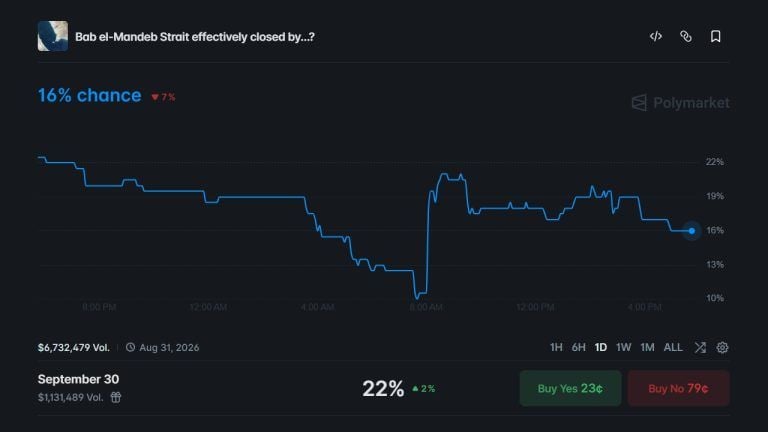
Iranian officials describe the current confrontation with the United States as a 'full-scale war,' with the economy emerging as the hardest-hit sector. The declaration comes as a forecast indicates only a 14.5% probability that traffic through the Strait of Hormuz will return to normal by August 31, signaling prolonged disruption in a critical global energy chokepoint.
Economic Frontline
The economic dimension of the conflict has been the most intense. Iran's economy has faced severe pressure from US measures, though specific details of the damage were not disclosed. The characterization of a 'full-scale war' underscores the severity of the economic tools being employed by both sides. Sanctions and counter-sanctions have become the primary weapons, with Iran's oil exports and access to international banking systems under constant strain.
The impact is felt across Iran's domestic markets, where inflation and currency depreciation have eroded purchasing power. While the government has not released official figures, the economic war has clearly taken a toll on ordinary citizens. The conflict shows no signs of easing, as both Washington and Tehran remain entrenched in their positions.
Strait of Hormuz: A Key Chokepoint
The Strait of Hormuz, a narrow waterway connecting the Persian Gulf to the open ocean, is a vital artery for global oil shipments. Roughly one-fifth of the world's petroleum passes through it daily. Any disruption there sends ripples through energy markets worldwide.
A prediction model now gives a 14.5% confidence level that normal traffic patterns will resume by the end of August. That low probability suggests that analysts and traders see a slim chance of normalization within the next few months. The strait has been a flashpoint in US-Iran tensions for years, with Iran previously threatening to block the passage in retaliation for sanctions.
What the Forecast Means
The 14.5% figure represents a binary 'YES' outcome in a forecasting tool, meaning the question 'Will Strait of Hormuz traffic return to normal by August 31?' is currently seen as unlikely. The low probability reflects ongoing risks: naval patrols, insurance costs for tankers, and diplomatic standoffs all contribute to the uncertainty.
For Iran, the disruption in the strait directly impacts its ability to export oil, a key revenue source. The economic war and the strait's status are intertwined. If traffic does not normalize by August 31, the economic pressure on Iran will continue, and global oil markets will remain on edge.
The next key date to watch is August 31, when the Strait of Hormuz traffic prediction will be tested. Until then, the full-scale economic war grinds on, with no clear end in sight.