An Iranian attack set the Kavomaleas tanker ablaze in the Strait of Hormuz on Tuesday, escalating tensions in one of the world's most critical maritime chokepoints. The incident, which occurred near the narrow waterway that handles about a fifth of global oil shipments, has already sent ripples through shipping and insurance markets.
Attack Details and Immediate Aftermath
The tanker, identified as the Kavomaleas, was struck by what officials described as a direct hit from an Iranian strike. Crew members reportedly abandoned the vessel as flames engulfed parts of the ship. No casualties have been confirmed, but the blaze continued to burn hours after the attack. The exact location within the Strait of Hormuz has not been disclosed, but the area is known for heavy traffic and limited maneuvering room.
This is not the first time the strait has seen military action, but the targeting of a commercial tanker marks a significant escalation. The attack comes amid heightened regional tensions, though the specific motive behind the strike remains unclear. The Iranian government has not issued an official statement regarding the incident.
Prediction Market Sees Low Odds of Normal Traffic by August
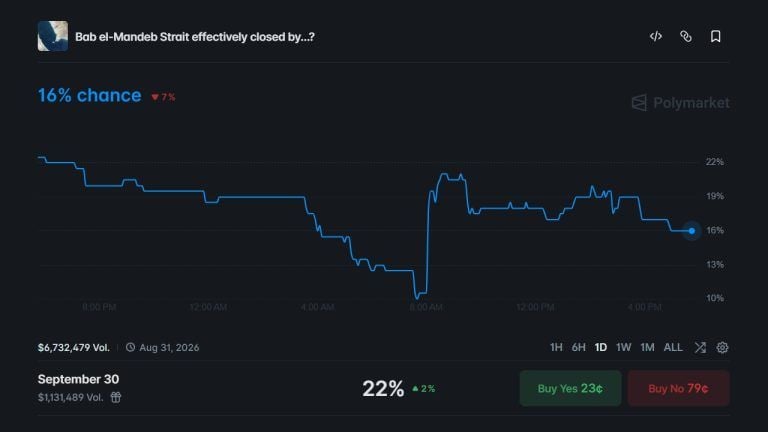
A prediction market tracking the situation now puts the probability that traffic in the Strait of Hormuz will return to normal by August 31 at just 14.5%. That low figure suggests traders and analysts expect disruptions to persist for weeks, if not longer. The market, which aggregates bets from participants around the world, has seen the probability drop sharply since the attack.
For context, before the incident, the same market had estimated a much higher chance of normal operations by the end of August. The sudden shift reflects the uncertainty created by the attack and the potential for further military responses. Shipping companies are already rerouting vessels, and insurance premiums for transiting the strait are expected to spike.
What the Attack Means for Global Shipping
The Strait of Hormuz is a narrow passage between Iran and Oman, connecting the Persian Gulf to the Gulf of Oman. Any prolonged disruption forces tankers to take longer, costlier routes around the Arabian Peninsula. That could push up oil prices and delay deliveries, especially for countries heavily reliant on Gulf crude.
Industry observers are watching for any signs of a broader conflict that could close the strait entirely. For now, traffic continues, but under heightened security. The Kavomaleas remains adrift and burning, a stark reminder of the risks in these waters. The next few days will be critical: if the fire is not contained, the tanker could sink, potentially blocking the channel and creating an environmental disaster.
No official timeline has been given for when the strait might return to normal operations. The prediction market's 14.5% figure is just one data point, but it reflects a grim outlook. For the crews still on the water, and the companies waiting for their cargo, the wait is just beginning.