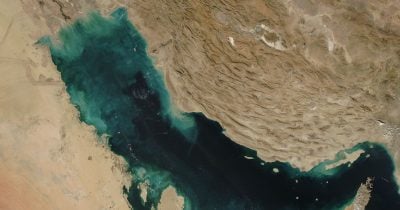
Jordan's government formally condemned Iran's military strikes on Bahrain and Kuwait this week, a move that could complicate the Biden administration's push to finalize a nuclear and security deal with Tehran. The condemnation, issued amid a sharp escalation in Gulf tensions, marks a rare public break by a key US ally in the region against Iran's actions.
Why Jordan spoke out
Amman's statement did not mince words. It called the attacks on two Gulf Cooperation Council members a "violation of sovereignty" and a threat to regional stability. Jordan, which has maintained diplomatic ties with Iran while also hosting US military forces, has typically avoided direct criticism of Tehran. The shift reflects growing alarm across the Middle East as Iran's military posture becomes more aggressive in 2026.
The kingdom's position is especially significant given its role as a mediator in past US-Iran backchannel talks. Jordanian intelligence has often served as a discreet conduit between Washington and Tehran. Now, by publicly siding with Bahrain and Kuwait, Amman risks alienating the Iranian negotiators who had begun to trust its neutrality.
Diplomatic efforts to revive the 2015 nuclear agreement, or to replace it with a broader framework that includes missile and proxy-force limits, were already fragile. The attacks on Bahrain and Kuwait — two of the countries most directly concerned by Iran's regional ambitions — have hardened positions on both sides.
According to sources familiar with the talks, the US negotiating team had been preparing to present a final draft in early 2027. Jordan's condemnation provides ammunition to hardliners in Washington who argue that Iran cannot be trusted. On the Iranian side, the public rebuke may strengthen the hand of conservatives who oppose any deal with the West.
Market confidence, already shaky after the attacks, took a further hit. Oil prices rose 3% on the news, and Gulf stock indexes fell. Investors are pricing in a higher probability of prolonged instability, which would disrupt supply chains and delay any sanctions relief that might otherwise boost trade.
The broader regional picture
Jordan's move also underscores a deepening rift between Iran and the Arab states that had begun to normalize relations under the 2023 China-brokered agreement. That rapprochement had led to direct flights, trade delegations, and even security cooperation between Tehran and Riyadh. But the strikes on Bahrain and Kuwait have shattered the fragile trust.
Bahrain, home to the US Fifth Fleet, and Kuwait, a major oil exporter and host to US forces, are now demanding a unified Arab response. The Gulf Cooperation Council is scheduled to meet next week in Riyadh to discuss joint action. Jordan is not a member of the GCC but has been invited to attend as an observer.
Whether the condemnation will force a delay in the US-Iran negotiations remains unclear. The State Department has not yet issued a formal response to Jordan's statement. A spokesperson declined to comment, citing the sensitivity of the talks. The next round of negotiations is tentatively set for mid-February in Vienna.