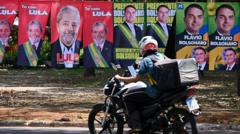
Polymarket's bettors had Senator Flávio Bolsonaro ahead of President Lula in Brazil's election days before national polls showed the opposite — and the market's read held up. It's the second high-profile cycle where the crypto-based prediction platform's odds lined up with the result while traditional polling lagged.
National surveys during the race put Lula in front of the senator, with the gap varying by pollster. Polymarket's contract pricing told a different story. When the votes were counted, Bolsonaro led, matching the market rather than the poll averages.
What Polymarket's traders saw that pollsters missed
Prediction markets like Polymarket don't ask people who they plan to vote for. They ask them to put money behind an outcome. That difference is the entire pitch, and it's why the platform's Brazil numbers moved against the polling consensus in the final stretch.
Polling has known structural problems: turnout models, shy voters who won't tell a live caller their choice, and sampling frames that miss people who don't answer unknown numbers. A market has a different failure mode — thin liquidity can distort prices — but when volume is real, the price reflects what traders are willing to lose money on.
In Brazil, that meant Polymarket's contract for the Bolsonaro-Lula matchup stayed tilted toward the senator even as some national polls continued to show Lula ahead. The discrepancy was visible for days. Anyone watching both signals had to pick one.
The 2024 U.S. election is the other data point
This isn't the first time the pattern has shown up. Before the 2024 U.S. presidential election, Polymarket's odds favored Donald Trump. Traditional polls and pundits were split, with many projecting a close race or a narrow Democratic edge. Trump won. The market was right.
That result gave Polymarket a credibility boost it has been trading on since, and Brazil now reinforces the narrative. Two cycles isn't a track record that settles the argument, but it's enough that political analysts can no longer wave off prediction markets as a curiosity.
The platform's rise hasn't been frictionless. Regulators in multiple jurisdictions have scrutinized event contracts, and U.S. users have faced access restrictions at various points. Still, the volume has kept coming, and the pricing has kept proving useful to people willing to read it.
What this means for the polling industry
Traditional pollsters aren't going away. They measure sentiment, not just outcomes, and campaigns need that data. But the Brazil episode puts another dent in the assumption that a well-run poll is the best available forecast.
The practical takeaway for anyone following an election: watch both. When the market and the polls disagree, that gap is itself information. It tells you which voters are being missed, or which traders think they know something the samples don't.
Polymarket's Brazil contract resolved with the senator ahead, and the platform's reputation for calling races that polls get wrong now has two prominent examples. Whether that holds in the next cycle is an open question — and the next set of contracts will price it in real time, with real money, before any pollster finishes dialing.