The probability of the Iranian regime falling before 2027 has fallen sharply on the prediction market Polymarket, dropping to 9.5% following recent US strikes that hit a city housing a nuclear facility. The shift in betting odds reflects a reassessment by traders who had previously priced in a higher chance of political upheaval in Tehran.
What the betting market shows
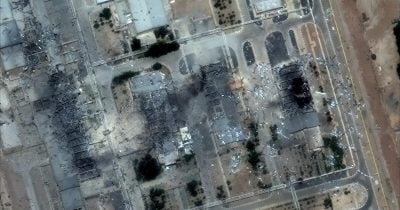
Polymarket, a decentralized platform where users wager on real-world events, had seen the “Iranian regime collapse by 2027” contract trade as high as 15% earlier this month. After news broke that US strikes targeted a city that hosts a nuclear plant, the odds slid to 9.5%. The move suggests traders now see the strikes as a stabilizing factor for the current government — at least in the short term — rather than a trigger for its downfall.
Iranian state media confirmed the strikes hit a city that hosts a nuclear plant, though they did not specify damage to the facility itself. The regime has a history of rallying domestic support after foreign attacks, which may explain why bettors are pricing in a lower chance of collapse. Polymarket contracts are binary: they pay out $1 if the event occurs before the deadline, and $0 if it doesn’t. A 9.5% price implies roughly a 1-in-10 chance.
Strikes near nuclear site raise stakes
The location of the strikes has drawn particular attention. Hitting a city that hosts a nuclear plant — even if the plant itself was not the target — introduces a new layer of risk. Any accidental damage to a reactor could trigger a humanitarian and environmental disaster, potentially drawing in international actors far beyond the immediate conflict. That scenario, however, appears to be one the market currently considers unlikely.
The drop in regime-collapse odds comes despite the strikes themselves being a significant military action. Typically, such operations increase uncertainty and can boost the perceived probability of regime change. But the market’s reaction suggests traders believe the strikes may actually strengthen the Iranian government’s position, at least temporarily, by allowing it to rally nationalist sentiment and crack down on dissent under the cover of external threat.
It’s a counterintuitive move, but not unprecedented in betting markets. Similar patterns have been observed in other conflicts where external attacks initially reduced the odds of a government falling, only for those odds to spike later as the situation spiraled. Whether that pattern repeats here is an open question.
For now, the 9.5% figure is the market’s best guess. The next major data point will be any official response from Tehran — whether it escalates militarily, seeks diplomatic off-ramps, or focuses on internal consolidation. Traders will be watching for signs of unrest inside Iran, as well as any statements from the US about further strikes. The contract expires at the end of 2026, leaving plenty of time for the odds to swing again.