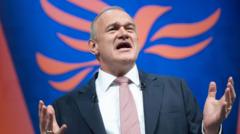
Vladimir Putin said this week he sees no point in meeting Ukrainian President Volodymyr Zelensky to end the war. The refusal came right after Zelensky's open letter calling for face-to-face talks. For crypto markets already sitting in Extreme Fear (the Fear & Greed index is at 12), the move kills any near-term hope for diplomatic de-escalation.
A diplomatic dead end
Putin's message was blunt: talking is pointless. That closes the door on the slim chance the two leaders would sit down. The conflict stays open-ended, and that means no peace dividend for risk assets anytime soon. Zelensky had pushed for direct talks — now that path is blocked.
📊 Market Data Snapshot
This isn't new information. Markets have priced in the ongoing war. But when sentiment is already at Extreme Fear, any confirmation of prolonged uncertainty can trigger a sharp, temporary sell-off as weak hands capitulate. Bitcoin may test recent support zones again, with low-volume bounces failing to reclaim higher levels. The dominant trend remains bearish. In this macro environment — sticky inflation, hawkish central banks — geopolitical stalemate adds to the 'higher-for-longer' risk premium.
The EU angle most media miss
As Putin refuses to talk, the war drags on. That gives the European Union a stronger political mandate to enforce stricter crypto sanctions targeting Russian-linked wallets. The EU is already expanding its crypto surveillance framework. Longer war means higher probability of EU-level rules that could de-platform Russian addresses and tighten KYC. That would squeeze liquidity for all market participants, not just Russians. There's another knock-on effect: European natural gas prices stay elevated. That raises electricity costs for Bitcoin miners in Europe, squeezing margins and potentially shifting hashrate to North America or Central Asia — reducing network geographic diversity.
History's lesson on prolonged uncertainty
The SEC's rejection of the Winklevoss Bitcoin ETF in 2018 offers a parallel. Back then, prolonged regulatory uncertainty suppressed risk appetite and led to downward price pressure for months. Markets hate ambiguity. They often price in worst-case scenarios until clarity emerges. In the next 30 to 90 days, we should expect subdued or declining prices for risk assets like BTC and ETH — though the effect may be muted given this event's lower direct market relevance.
For traders, the play is to use any short-lived relief rallies to reduce longs. For investors, the conflict reinforces Bitcoin's narrative as a non-sovereign asset, but in the near term, macro headwinds keep prices range-bound near current lows. The next catalyst could be the EU's next sanctions package — watch for that.