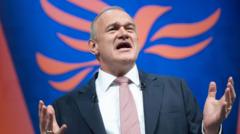
UK band Massive Attack has been banned in Singapore after shouting "free Palestine" at a concert in the city-state. The group said it was "surprised and disappointed" by the treatment. The ban lands in a jurisdiction that has become one of crypto's most important hubs, and the industry is asking what it signals for speech rules around digital assets.
The ban and the band's response
Singapore moved against Massive Attack after the group's on-stage shout during a concert. The band said it was "surprised and disappointed" by the way it was treated. The scope of the ban wasn't immediately clear.
📊 Market Data Snapshot
Why crypto is paying attention
Singapore isn't just another market. It hosts Token2049, one of crypto's biggest annual gatherings, and has licensed a roster of exchanges and payment firms. A hardline stance on political expression in a jurisdiction that's central to the industry's global footprint is the kind of thing compliance teams notice. A band ban may seem trivial, but it signals how far the state is willing to go to police speech.
The compliance question
Crypto media tends to focus on financial regulation — licensing, anti-money laundering, custody rules. What gets less attention is how broader speech laws can land on crypto businesses. Exchanges and DAOs operating in Singapore could face new pressure to police political content, particularly in on-chain governance or NFT projects. That means content moderation tools, legal review, and higher operating costs. For a sector built on open speech, that's an awkward fit.
The censorship premium
There's a contrarian read here. Every time a government clamps down on expression, the pitch for permissionless networks gets a little easier to make. Privacy-focused assets and decentralized platforms become more attractive as hedges against state control. This ban won't move Bitcoin or Ethereum — market conditions are already driving those — but it adds to a growing list of incidents that reinforce crypto's core value proposition.
Where firms set up shop
The bigger question may be location. Singapore has been a preferred base for crypto startups because of its regulatory clarity. But clarity cuts both ways. Projects with politically active founders or DAOs might start looking at Dubai, Switzerland, or the UAE, where speech rules are looser. A crackdown on political expression, however minor, could slowly erode Singapore's edge in attracting crypto talent.
The next thing to watch is whether Singapore's regulator clarifies how speech rules apply to digital asset platforms. The band's ban itself won't move markets. The precedent it sets might.