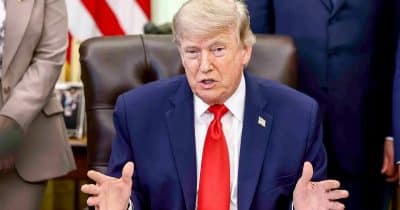
President Donald Trump on Thursday dismissed previously stated red lines that would justify US military action against Iran, a shift toward pragmatism that could ease tensions in the Middle East and stabilize global oil markets. Speaking at a press conference, Trump stopped short of threatening force over Iran's nuclear program or regional activities, breaking with his administration's earlier bellicose posture. But the president made clear that peace remains conditional, leaving the door open for conflict if certain unspecified conditions are not met.
Press Conference Remarks Signal Policy Change
At the press conference, Trump directly rejected the notion of fixed red lines that would automatically trigger war with Iran. While he did not specify which previous red lines he was discarding, the comments represent a notable departure from earlier statements by top administration officials, who had warned that attacks on US allies or advances in uranium enrichment would cross a threshold for military response.
The president instead emphasized diplomacy and the potential for a deal, saying he is open to negotiations without preconditions. He did not offer details on what such negotiations would look like or what concessions the US would seek. The shift appears to be a response to growing concerns that a direct confrontation with Iran could spiral into a costly war with no clear exit.
Market and Geopolitical Implications
Investors and oil traders reacted quickly to the news. Brent crude futures fell more than 2 percent on Thursday as the prospect of a military conflict that could disrupt shipping through the Strait of Hormuz receded. Analysts noted that a sustained reduction in tensions would remove a key risk premium from oil prices, which have fluctuated wildly in recent months on war fears.
Beyond markets, the change in tone could reshape the balance of power in the region. Iran's allies in Iraq, Syria, and Lebanon have been bracing for a possible US strike. Lower tensions may also open space for European and Gulf mediators to push for broader de-escalation, though Iran's leadership has not yet responded publicly to Trump's latest remarks.
The Conditional Nature of Peace
Trump was careful to hedge his new pragmatism. He said peace is contingent on Iran's behavior—specifically, that Tehran must stop what he called “provocations” and “aggressive acts.” He did not define those terms or set a timeline for compliance. That ambiguity leaves the US with room to reimpose the threat of military action if the administration deems Iran's actions unacceptable.
The conditional language also complicates any diplomatic opening. Iran has long demanded that the US lift sanctions before it will negotiate. Trump, however, gave no indication he is willing to ease economic pressure. So while the immediate risk of war has fallen, the underlying standoff remains unresolved. The next test will come within weeks: Iran is expected to resume talks with European powers, and the US will watch closely for any sign that Tehran is willing to meet the president's undefined conditions.