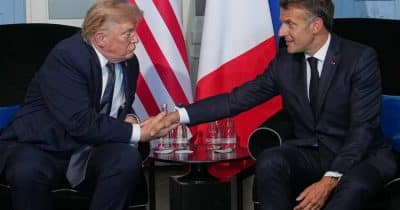
President Donald Trump stated that Iran will not possess a nuclear weapon, pointing to a memorandum of understanding (MoU) as the mechanism to prevent that outcome. The MoU, signed between the two countries, is seen by the administration as a framework to curb Tehran's nuclear ambitions and potentially ease broader tensions across the Middle East.
The Memorandum of Understanding
Trump’s assertion came during a press briefing where he referenced the MoU as a concrete step toward limiting Iran’s nuclear program. The document outlines commitments from both sides, though its exact terms remain undisclosed. The president expressed confidence that the agreement would achieve its goal of keeping Iran from developing atomic weapons.
This is not a formal treaty but a bilateral understanding, which means it does not require Senate approval. Critics have questioned whether such an arrangement carries enough legal weight to enforce compliance from Tehran over the long term.
Potential Impact on Global Oil Markets
A successful MoU could stabilize regional conflicts that have periodically disrupted oil supplies. The Middle East remains a critical hub for crude production, and any reduction in hostilities often translates into steadier prices. Analysts have noted that if the understanding leads to a de-escalation of proxy wars or a reduction in attacks on tankers, markets could see less volatility.
However, the White House has not linked the nuclear deal directly to oil policy. The connection is indirect: a calmer region could mean fewer supply shocks, but past agreements with Iran have not always produced sustained calm.
Skepticism Remains High
Despite Trump’s optimism, skepticism about the MoU’s effectiveness is widespread. Many in Congress and among foreign policy observers doubt that the memorandum alone can prevent Iran from enriching uranium or developing delivery systems. The country has a history of advancing its nuclear capabilities even as negotiations continue.
No independent verification of Iran’s compliance has been announced, and the MoU reportedly lacks an inspection regime. That gap fuels the doubts. Without clear enforcement, the document may amount to little more than a statement of intent.
The coming months will test whether the memorandum can actually slow Iran’s nuclear progress. Trump’s statement sets a clear red line, but the mechanism to hold Iran to that line remains a subject of debate in Washington and beyond.