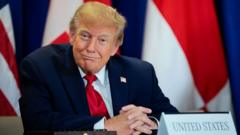
President Trump has suggested declaring the Strait of Hormuz a U.S. territory, a proposal that could inflame tensions with Iran and complicate already fragile diplomatic efforts in the region. The idea, floated amid rising friction between Washington and Tehran, also carries the risk of pushing the two countries closer to military confrontation.
An unusual territorial suggestion
The president's suggestion is not a formal policy change, but it signals a willingness to consider aggressive moves in one of the world's most strategically important waterways. The Strait of Hormuz is a narrow passage connecting the Persian Gulf with the Gulf of Oman, a route that carries a significant portion of global oil exports. Any attempt to claim it as U.S. territory would likely be met with fierce opposition from Iran and other regional powers.
The idea has no clear legal basis under international law, which typically recognizes territorial claims over land, not international straits used for transit. But the suggestion alone could be enough to raise the stakes in an already volatile standoff.
What's at stake in the strait
The strait is a chokepoint for energy shipments, with a large share of the world's crude oil moving through its waters each day. That makes it a potential flashpoint in any conflict between the U.S. and Iran. Both countries have previously threatened to disrupt shipping in the area, and any move to assert U.S. control would likely be seen as a direct provocation by Tehran.
For the international community, the strait's status is a matter of global economic stability. Even the suggestion of a U.S. territorial claim could spook markets and complicate the efforts of other nations trying to ease tensions through diplomacy.
Risks of the proposal
The proposal's most immediate risk is that it heightens regional tensions. Iran has long viewed the strait as vital to its own security and economy, and any U.S. attempt to claim it would be interpreted as a hostile act. That could prompt Tehran to respond with its own escalatory measures, such as increased naval patrols or threats to close the waterway.
Diplomatic efforts could also take a hit. The U.S. and Iran have been engaged in indirect negotiations over various issues, and a move like this would likely derail any progress. Other countries in the region, including Gulf states that rely on the strait for their exports, might see the suggestion as reckless and destabilizing.
The most dangerous outcome is military escalation. The U.S. Navy already operates in the region, and a territorial claim could lead to confrontations with Iranian forces. Even an accidental clash could spiral into a larger conflict, dragging in other nations and threatening global energy supplies.
What the suggestion signals
While the proposal is far from becoming official policy, it reflects a broader willingness by the administration to use provocative rhetoric in dealing with Iran. It also puts the strait back in the spotlight, reminding the world how fragile the balance is in that corner of the Middle East.
The idea is likely to be dismissed by many in the international community as unrealistic, but it adds another layer of unpredictability to an already tense situation. For now, it remains a suggestion, but one that carries real consequences if pursued.
Whether the administration will translate this suggestion into official policy remains an open question. The coming weeks will show if it gains traction or quietly fades.