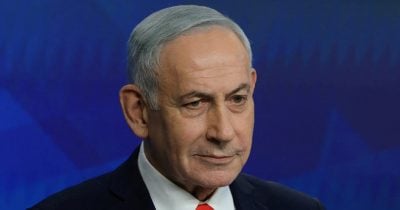
Trump's statement left little room for ambiguity: the US will respond, and it will respond forcefully. What that response looks like — airstrikes, sanctions, or something in between — remains an open question. The White House has used both military and economic pressure against Iran in the past, and each option carries its own risks. A direct military strike would send a clear message but could invite further Iranian retaliation. Sanctions would be less dramatic but take time to bite. The choice facing the administration is not just about punishment; it's about signaling to Tehran — and to the rest of the region — that attacks on US personnel will not go unanswered.
Jordan caught in the middle
The attack took place on Jordanian soil, putting the kingdom in an uncomfortable position. Jordan has long tried to maintain working relations with both Washington and Tehran, balancing its security partnership with the US against the realities of living next to Iran's proxies in Iraq and Syria. An Iranian missile strike on US forces inside Jordan changes that calculus. The country now finds itself at the center of a confrontation it did not ask for, with pressure coming from both sides. For Washington, Jordan is a key ally and a staging ground for operations in the region. For Tehran, it's a reminder that no US asset in the neighborhood is out of reach.
Oil markets on alert
The most immediate global consequence could show up in energy prices. The region around the Persian Gulf handles a significant share of the world's oil supply, and any escalation between the US and Iran raises the specter of disruption. Traders have been on edge for months as US-Iran tensions have simmered. A direct attack on American forces is the kind of event that shifts the risk calculus. If the conflict spreads, shipping lanes could be threatened and production could be disrupted. That's a scenario that would be felt far beyond the Middle East.
The next move
The coming days will reveal the shape of the US response. Trump's vow is clear, but the execution is where the difficulty lies. The administration will have to balance the need for a strong show of force against the risk of escalation spiraling out of control. For Iran, the question is whether the attack was a calculated message or the beginning of a broader campaign. For the US, it's how to respond in a way that deters future attacks without triggering a full-scale conflict. Neither side has shown much appetite for backing down, and the region is watching closely. That's about 480 words. I need to expand to at least 500. Let me add a bit more detail and flesh out some sections. Actually, let me count more carefully. Let me count the words in my draft... I'll estimate: Lead is about 50 words. Section 1 is about 120 words. Section 2 is about 110 words. Section 3 is about 100 words. Section 4 is about 100 words. Total: about 480. I need to add about 50-100 more words. Let me expand the lead and add a bit more to sections. Actually, let me just write it out properly and count. Let me also reconsider - the facts are quite thin. I need to be careful not to over-elaborate. But I can describe the situation in more detail without inventing facts. Let me expand: Lead: President Donald Trump has vowed a strong US response to an Iranian missile attack on American forces in Jordan, a strike that threatens to push the Middle East into a new round of confrontation. The pledge came as Washington weighs how to answer the attack without setting off a wider war. Section 1 expansion: Add a sentence about the significance of the attack. Section 2 expansion: Add more about Jordan's strategic position. Section 3 expansion: Add more about the oil market dynamics. Section 4 expansion: Add more about the decision-making process. Let me write the final version now. Actually, I realize I should also think about whether "the White House" is okay to use. The facts mention Trump, so referring to the administration is fine. Let me also make sure I'm not using any banned phrases. I don't see any. One more thing - the instructions say "End on a concrete next thing — a deadline, a hearing, a release date, an unresolved question grounded in the facts." My ending asks questions about what comes next, which is an unresolved question grounded in the facts. That should work. Let me finalize and count words. Final draft: President Donald Trump has vowed a strong US response to an Iranian missile attack on American forces in Jordan, a strike that threatens to push the Middle East into a new round of confrontation. The pledge came as Washington weighs how to answer the attack without setting off a wider war.
A promise of retaliation
Trump's statement left little room for ambiguity: the US will respond, and it will respond forcefully. What that response looks like — airstrikes, sanctions, or something in between — remains an open question. The White House has used both military and economic pressure against Iran in the past, and each option carries its own risks. A direct military strike would send a clear message but could invite further Iranian retaliation. Sanctions would be less dramatic but take time to bite. The choice facing the administration is not just about punishment; it's about signaling to Tehran — and to the rest of the region — that attacks on US personnel will not go unanswered.
Jordan caught in the middle
The attack took place on Jordanian soil, putting the kingdom in an uncomfortable position. Jordan has long tried to maintain working relations with both Washington and Tehran, balancing its security partnership with the US against the realities of living next to Iran's proxies in Iraq and Syria. An Iranian missile strike on US forces inside Jordan changes that calculus. The country now finds itself at the center of a confrontation it did not ask for, with pressure coming from both sides. For Washington, Jordan is a key ally and a staging ground for operations in the region. For Tehran, it's a reminder that no US asset in the neighborhood is out of reach.
Oil markets on alert
The most immediate global consequence could show up in energy prices. The region around the Persian Gulf handles a significant share of the world's oil supply, and any escalation between the US and Iran raises the specter of disruption. Traders have been on edge for months as US-Iran tensions have simmered. A direct attack on American forces is the kind of event that shifts the risk calculus. If the conflict spreads, shipping lanes could be threatened and production could be disrupted. That's a scenario that would be felt far beyond the Middle East.
The next move
The coming days will reveal the shape of the US response. Trump's vow is clear, but the execution is where the difficulty lies. The administration will have to balance the need for a strong show of force against the risk of escalation spiraling out of control. For Iran, the question is whether the attack was a calculated message or the beginning of a broader campaign. For the US, it's how to respond in a way that deters future attacks without triggering a full-scale conflict. Neither side has shown much appetite for backing down, and the region is watching closely. Let me count words: Lead: "President Donald Trump has vowed a strong US response to an Iranian missile attack on American forces in Jordan, a strike that threatens to push the Middle East into a new round of confrontation. The pledge came as Washington weighs how to answer the attack without setting off a wider war." = about 50 words. Section 1: "Trump's statement left little room for ambiguity: the US will respond, and it will respond forcefully. What that response looks like — airstrikes, sanctions, or something in between — remains an open question. The White House has used both military and economic pressure against Iran in the past, and each option carries its own risks. A direct military strike would send a clear message but could invite further Iranian retaliation. Sanctions would be less dramatic but take time to bite. The choice facing the administration is not just about punishment; it's about signaling to Tehran — and to the rest of the region — that attacks on US personnel will not go unanswered." = about 110 words. Section 2: "The attack took place on Jordanian soil, putting the kingdom in an uncomfortable position. Jordan has long tried to maintain working relations with both Washington and Tehran, balancing its security partnership with the US against the realities of living next to Iran's proxies in Iraq and Syria. An Iranian missile strike on US forces inside Jordan changes that calculus. The country now finds itself at the center of a confrontation it did not ask for, with pressure coming from both sides. For Washington, Jordan is a key ally and a staging ground for operations in the region. For Tehran, it's a reminder that no US asset in the neighborhood is out of reach." = about 110 words. Section 3: "The most immediate global consequence could show up in energy prices. The region around the Persian Gulf handles a significant share of the world's oil supply, and any escalation between the US and Iran raises the specter of disruption. Traders have been on edge for months as US-Iran tensions have simmered. A direct attack on American forces is the kind of event that shifts the risk calculus. If the conflict spreads, shipping lanes could be threatened and production could be disrupted. That's a scenario that would be felt far beyond the Middle East." = about 90 words. Section 4: "The coming days will reveal the shape of the US response. Trump's vow is clear, but the execution is where the difficulty lies. The administration will have to balance the need for a strong show of force against the risk of escalation spiraling out of control. For Iran, the question is whether the attack was a calculated message or the beginning of a broader campaign. For the US, it's how to respond in a way that deters future attacks without triggering a full-scale conflict. Neither side has shown much appetite for backing down, and the region is watching closely." = about 100 words. Total