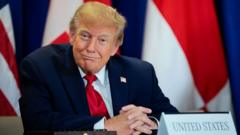
President Trump has welcomed a trilateral defense agreement among Saudi Arabia, Turkey, and Pakistan, a pact that could redraw the Middle East's security map. The deal, announced this week, brings together three of the region's most capable militaries under a shared framework for cooperation. Its stated goal is to foster self-reliance in defense matters.
The agreement lands at a moment when security arrangements across the region are already shifting. For decades, the United States has served as the primary security guarantor for several Gulf states. This new trilateral structure suggests a move toward more independent coordination among regional powers.
A pact with few public details
Specifics of the agreement remain thin. The three countries have committed to deepening defense cooperation, but no concrete steps have been disclosed. Whether that means joint exercises, intelligence sharing, or coordinated weapons procurement is still unclear. The announcement itself, however, carries weight.
Trump praised the pact in a statement, calling it a positive development for the region. The White House has not elaborated on what role, if any, Washington will play in supporting the arrangement.
Why self-reliance matters
The emphasis on self-reliance is the most striking element. Saudi Arabia, Turkey, and Pakistan have each leaned on outside powers for security at various points. Turkey is a NATO member. Saudi Arabia has long depended on American military backing. Pakistan's defense ties have historically swung between the United States and China.
A coordinated approach among these three could reduce that dependency. It also creates a new axis that may counterbalance existing alliances. The Middle East has been split between camps aligned with different external patrons. This trilateral arrangement injects a fresh variable into that calculus.
Potential ripple effects
The pact is likely to draw attention from other regional players. Iran, Israel, and the Gulf states will be watching closely. For now, the three signatories have not outlined a timeline for implementation. That leaves open questions about how the agreement will interact with existing defense structures.
Turkey's NATO membership adds a layer of complexity. Saudi Arabia and Pakistan each maintain their own bilateral relationships with Washington. How these overlap with the new trilateral framework remains to be seen.
The next step is expected to be a meeting of defense officials to define the scope of cooperation. No date has been set. Until then, the region waits to see whether this is a statement of intent or the beginning of a deeper military alliance.