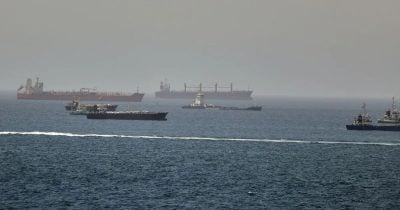
The UAE publicly accused Iran of launching renewed drone and missile attacks on Saturday, hours after a large fire broke out at the key Emirati oil port of Fujairah. The port sits beyond the largely-blocked Strait of Hormuz, making it a vital alternative route for crude exports. For crypto markets already in the Fear zone — the Fear & Greed index sits at 38 — the news introduces a clear geopolitical shock that could amplify risk-off moves.
Fire at Fujairah
Fujairah is one of the few oil ports that can bypass the Strait of Hormuz, and a sustained disruption there would tighten global supply quickly. The UAE's accusation against Iran, if confirmed, would reopen a Gulf fault line that markets had largely priced out after the 2023 détente. No independent confirmation of the attack's source has emerged; no satellite images or claim of responsibility from Iran have been released. That lack of verification means the market could be overreacting — or not reacting enough.
📊 Market Data Snapshot
Geopolitical shocks like this typically drive capital out of speculative assets and into commodities and havens. Oil futures are expected to spike 2-4% on Monday, and that could drag Bitcoin and altcoins down 1-2% in a risk-off rotation. The internal intelligence assessment notes that the historical pattern from the 2019 Abqaiq attack on Saudi Aramco showed a brief dip in crypto followed by a recovery within a week. But there are crypto-specific channels to watch. Stablecoin minting on Ethereum and Tron — USDT and USDC — often spikes within the first hour of a geopolitical event as institutional capital rotates into 'digital dollars'. A 200M+ USDT mint on Tron would confirm the risk-off narrative is real, not just retail panic.
Bitcoin's decoupling moment?
There's also a contrarian angle: this event could test whether Bitcoin can break its correlation with oil and behave as a non-sovereign store of value. The fire at Fujairah highlights the vulnerability of centralized energy infrastructure, potentially accelerating institutional adoption of Bitcoin as a geopolitical hedge. If Bitcoin holds steady or rallies while oil spikes, it would signal a regime shift where crypto is treated as a distinct asset class in crises — offering diversification away from both traditional risk and safe havens. The next 24-48 hours will be telling.
What traders are watching
Beyond price action, the fire directly threatens the energy supply for UAE-based Bitcoin mining operations, which account for an estimated 3-5% of global hash rate. If the port is partially shut, natural gas prices in the region spike, raising mining costs and potentially forcing miners to sell BTC to cover expenses. That forced selling would add downward pressure. On the other hand, if the accusation is retracted or proven false — as happened with similar Fujairah tanker attacks in 2019 — markets could reverse sharply within days. Crypto's 24/7 nature amplifies that whipsaw. The unresolved question remains: is this a genuine escalation or a political maneuver ahead of nuclear talks? Without independent verification, traders should brace for a volatile week.