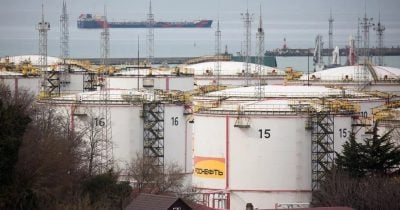
The UK government has loosened sanctions on Russian oil, citing rising fuel prices and an effective blockade of the Strait of Hormuz that is squeezing global supply. The waiver, announced this week, marks a sharp policy reversal for London, which had previously led European efforts to isolate Russian energy exports after the invasion of Ukraine.
Market data shows fearful sentiment across risk assets, with the Fear & Greed Index at 27 and a slightly bearish macro signal. On-chain indicators remain neutral, but high Bitcoin dominance suggests altcoins could underperform.
Why the UK moved now
The decision is a direct response to two converging pressures. Fuel prices in the UK have climbed steadily for weeks, and the blockade of the Strait of Hormuz — a chokepoint for about a fifth of the world's oil — has removed millions of barrels from daily supply. Without the waiver, London risked domestic fuel shortages and even higher prices at the pump.
📊 Market Data Snapshot
The UK government framed the move as a temporary measure to ensure energy security. But the timing is awkward: it comes just months after the UK pledged to tighten sanctions enforcement. The message is clear — when supply gets tight enough, geopolitical alignment takes a back seat.
The Strait of Hormuz is the real story
Most coverage will treat this as a Russia sanctions story. It's not. The primary driver is the escalating crisis in the Middle East. The Hormuz blockade — a separate, unfolding supply shock — has already forced several Asian refiners to cut output. Even if Russian oil flows back to global markets in full, a prolonged blockade could still trigger a severe supply crunch.
That's the detail crypto traders need to watch. Hedge against Russian sanction changes alone won't protect you if Hormuz disruption pushes oil above $100 and crushes risk appetite.
The short-term logic is straightforward: more Russian oil on the market should lower prices, easing inflation fears and giving risk assets like crypto a modest relief rally. But the longer-term effect may be more complicated for Bitcoin.
Lower oil prices reduce near-term inflation expectations. That weakens a key argument for Bitcoin as a store of value against fiat debasement. If inflation fears fade, the 'digital gold' narrative loses some urgency. Given the already fearful market sentiment, a rotation out of crypto into traditional risk assets isn't out of the question.
There's also a structural angle. If the UK — a core US ally — is seen breaking ranks on sanctions, it encourages other major buyers like India and China to push for non-dollar settlement of Russian oil. A shift away from dollar-denominated energy trade would weaken the dollar, a long-term bullish factor for Bitcoin. But that's a slow burn, not an immediate catalyst.
For now, markets are waiting to see if other European nations follow London's lead. The European Union is scheduled to review its own sanctions framework next week. If more waivers come, oil prices could drop further, and crypto may get a temporary tailwind — even if the inflation-hedge thesis takes a subtle hit.