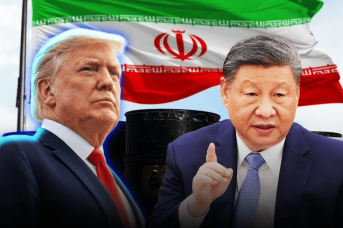
The United States has formally accused China of covertly supplying weapons to Iran, a charge that threatens to further inflame an already volatile region. The allegation, announced by U.S. officials this week, does not specify the type or quantity of arms involved but points to a pattern of clandestine transfers that Washington says violate international sanctions. The claim lands at a moment when tensions across the Middle East are running high, with Iran at the center of multiple conflicts.
The Allegation
U.S. officials say intelligence shows Chinese entities have been shipping military equipment to Tehran in secret, bypassing U.N. and U.S. embargoes. They did not name specific companies or individuals involved, citing ongoing investigations. The charge is not entirely new — Washington has for years warned Beijing against arming Iran — but the timing suggests a deliberate escalation of rhetoric. The U.S. has provided no public evidence, though officials say they are preparing a more detailed brief for allies.
Regional Tensions
The accusation comes as Iran continues to expand its missile and drone programs, which have been used by allied groups in Yemen, Lebanon, and Syria. China, for its part, has long positioned itself as a diplomatic player in the region, brokering a surprise rapprochement between Iran and Saudi Arabia last year. That balancing act now looks harder to maintain. The U.S. allegation could complicate Beijing’s efforts to present itself as a neutral mediator.
What’s at Stake for Washington and Beijing
For the Biden administration, the claim serves multiple purposes. It pressures China to cut ties with Tehran while also reinforcing Washington’s own sanctions regime. For Beijing, a public denial is almost certain — Chinese officials have repeatedly said they follow U.N. resolutions. But the accusation risks damaging trade talks and broader bilateral relations. Neither China nor Iran has yet issued a formal response to the latest U.S. statement.
What Comes Next
The U.S. said it will raise the issue at the United Nations Security Council, where China holds a veto. That means the matter is likely to stall diplomatically. But Washington may also impose new sanctions on Chinese companies it suspects of facilitating the arms deals. For now, the public record contains only the allegation — no photos, no shipping manifests, no named middlemen. Whether the U.S. releases that evidence could determine whether the charge sticks or fades.