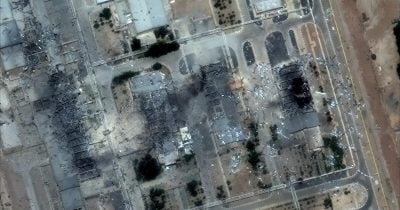
US airstrikes struck the Iranian city of Abadan on Tuesday, marking a sharp escalation in the 2026 conflict. The strikes hit a key oil refining hub near the Iraq border, though the Pentagon has not yet detailed the target or damage. The move comes as prediction markets show growing odds of further instability — including a 10.5% chance the Iranian regime falls by year's end and a 36.5% chance of airspace closure by July.
Why Abadan
Abadan sits on the Shatt al-Arab waterway, home to one of Iran's largest oil refineries. The city was a flashpoint during the Iran-Iraq war in the 1980s, and its infrastructure has long been considered a strategic asset. By striking Abadan, the US appears to be targeting Iran's economic lifeline — oil exports — while avoiding direct hits on nuclear or military sites that could trigger a broader war. The airstrikes are the first known US attacks on Iranian soil in this conflict, which began with tit-for-tat strikes in the Persian Gulf earlier this year.
What the prediction markets say
Polymarket, a leading prediction platform, now gives a 10.5% probability that the Iranian regime will collapse before January 1, 2027. That's up from roughly 5% before the airstrikes. The same market shows a 36.5% chance that Iran's airspace will be closed to commercial traffic by July 2026 — a move that would disrupt flights across the Middle East and force airlines to reroute around the country. Both figures reflect traders betting on a conflict that keeps escalating, not one that de-escalates.
Airspace closure and its ripple effects
A 36.5% probability of airspace closure by July is not a sure thing, but it's high enough that airlines and insurers are paying attention. If Iran shuts its airspace, carriers would have to avoid a massive chunk of Middle Eastern sky, adding hours to flights between Europe and Asia. The last time Iran closed its airspace was in January 2020 after the US killed Qasem Soleimani. That closure lasted only a day, but the current conflict is deeper and more sustained. The July deadline — just four months away — gives little time for contingency planning.
Regime collapse odds: real or noise?
The 10.5% chance of the regime falling by year's end is notable but still low. Prediction markets have a mixed track record on geopolitical events. They correctly called the 2020 US election but missed the speed of the Taliban's 2021 takeover. Still, the number has doubled since the airstrikes, suggesting traders see the strikes as a potential turning point. The regime in Tehran has faced internal protests and economic pressure for years, but a collapse would require a level of internal revolt or military defection that hasn't yet materialized.
What comes next
The US has not said whether more strikes are planned. Iran's foreign ministry condemned the attack and warned of retaliation. The next 48 hours will be critical: if Iran responds with a missile strike on US forces in the region, the cycle of escalation could accelerate. The prediction markets will update in real time, and the 36.5% airspace closure number could climb fast. For now, the world watches Abadan — and waits for the next move.