The United States and Iran have stepped up military strikes in the Strait of Hormuz, pushing a simmering 2026 conflict into a more dangerous phase. The escalation comes amid heightened tensions that have already disrupted global oil shipments and drawn in regional allies.
Escalation in the Strait
Both sides have increased the frequency and intensity of attacks in the narrow waterway, a critical chokepoint for about a fifth of the world's petroleum. The US Navy has conducted several operations targeting Iranian fast-attack craft and shore-based missile batteries, while Iranian forces have struck back with drones and anti-ship missiles against commercial vessels and naval patrols.
No official casualty figures have been released, but shipping companies have begun rerouting tankers, adding days to transit times and driving up insurance premiums. The Pentagon has not commented on specific operations, but a defense official described the situation as "fluid and dangerous."
Prediction market odds
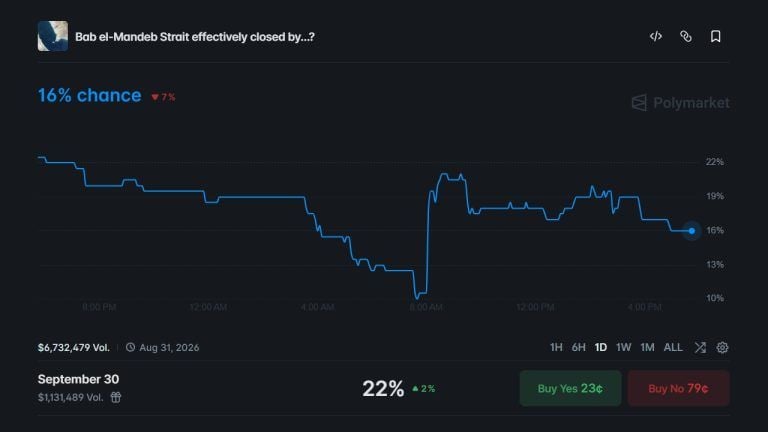
One measure of how the conflict is being watched: a prediction market now puts the probability of a US invasion of Iran before 2027 at 26.5%. That's roughly a one-in-four chance — a number that has climbed steadily as the fighting in the Strait has intensified.
Prediction markets aggregate bets on future events, and while they are not always accurate, they reflect the expectations of traders who have money on the line. The 26.5% figure suggests that a ground invasion, once considered unlikely, is now seen as a real possibility if the current trajectory continues.
What's at stake
The Strait of Hormuz is the world's most important oil chokepoint. Any sustained disruption there could send global energy prices soaring, hitting economies already strained by inflation and supply chain problems. Iran has long threatened to close the strait in response to pressure, and the current escalation brings that scenario closer.
For the US, the challenge is calibrating a response that deters further Iranian attacks without triggering a wider war. For Iran, the calculus is similar: it wants to raise the cost of US operations without inviting a full-scale invasion.
The 26.5% probability on the prediction market suggests that traders see invasion as a tail risk — unlikely but not impossible. If the fighting continues to escalate, that number could rise.
Neither side has signaled a willingness to de-escalate. The Strait of Hormuz remains a flashpoint, and the next few weeks will show whether the two countries can pull back or are headed for a broader confrontation.