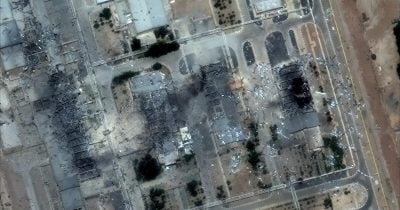
The United States has sent 100 refueling tanker aircraft to Israel, a deployment that comes as the conflict with Iran escalates. The move signals deepening American military backing for Israel at a moment when the region is bracing for possible wider confrontation. Separately, a prediction market now puts a 26.5% probability on Iran reconstruction funding being part of a US-Iran deal by 2026.
Why the tankers were sent
The tankers are designed to extend the range and endurance of Israeli fighter jets, allowing them to conduct longer missions without returning to base. The US has not publicly detailed the specific threat that prompted the deployment, but the timing aligns with heightened rhetoric and military posturing between Israel and Iran. Israeli officials have repeatedly warned they will not allow Iran to develop nuclear weapons, while Iran has threatened retaliation for any strikes on its territory or assets.
The 100 tankers represent a significant logistical commitment. They can refuel multiple aircraft simultaneously and are typically used to support large-scale operations. Their presence in Israel suggests the US is preparing for a scenario that could require sustained air operations, possibly against distant targets. The Pentagon has declined to comment on the duration of the deployment or whether it is linked to any specific timeline.
The prediction market's take
On a popular prediction platform, traders are betting on the likelihood that Iran reconstruction funding will be part of a formal US-Iran agreement by 2026. The current probability stands at 26.5%, meaning the market sees roughly a one-in-four chance that the two countries will reach a deal that includes financial support for rebuilding Iran's infrastructure or economy.
Prediction markets aggregate the bets of thousands of participants, and their odds are often used as a real-time gauge of geopolitical expectations. The 26.5% figure is not a forecast but a snapshot of collective opinion. It has fluctuated in recent weeks as news of the tanker deployment and other developments have emerged.
What the figure implies
The probability suggests that while a deal including reconstruction funding is not the most likely outcome, it is far from a long shot. Traders may be factoring in the possibility that the US and Iran eventually negotiate a broader arrangement that addresses nuclear concerns, regional behavior, and economic relief. Reconstruction funding could be a sweetener to secure Iranian compliance.
But the figure also reflects uncertainty. The tanker deployment could be a prelude to military action, which would make a diplomatic deal less likely. Alternatively, it could be a show of force designed to bring Iran to the negotiating table. The prediction market does not distinguish between these scenarios.
No official statements from the US or Iran have addressed the possibility of reconstruction funding. The White House has not commented on the prediction market data.
What comes next
The tankers are now in place, and the region waits to see how Israel and Iran respond. The prediction market will continue to update as events unfold. For now, the 26.5% probability is a data point — one of many — in a situation that remains fluid. No timeline has been set for any potential talks, and the deployment itself has not been linked to any specific diplomatic initiative.