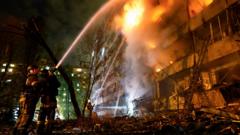
The United States has identified the service members killed in a recent Iranian attack and launched retaliatory airstrikes. The strikes mark a direct escalation after the casualties, though officials have not disclosed the exact number of troops lost or the targets hit. Meanwhile, prediction markets are pricing in a 26.5% chance that Iran will shut its airspace entirely by July 31—a sign traders see conflict risks deepening.
Retaliation confirmed
Pentagon officials confirmed the airstrikes late Thursday, saying they targeted facilities linked to Iran’s military. The operation came hours after the military released the names of the fallen troops. The attack by Iran had drawn immediate condemnation from Washington, and the retaliatory strikes were framed as a proportionate response. No further details on the strikes’ scope or casualties have been released.
Airspace closure odds
On prediction platforms, the implied probability of a full Iranian airspace closure by the end of July sits at 26.5%. That number reflects a betting market where traders assign real money to geopolitical outcomes. While not a formal forecast, it suggests a significant minority of participants expect Iran to take drastic measures—potentially disrupting flights across the region. The July 31 deadline gives the market a concrete window for the scenario to play out.
A region on edge
The tit-for-tat violence has raised concerns about broader instability. Iran’s airspace is a critical corridor for commercial aviation between Europe and Asia. A full closure would force airlines to reroute, adding hours to flights and driving up costs. The US retaliatory strikes have not yet triggered a response from Tehran, but the betting market’s implied odds indicate many traders are bracing for one.
The question now is whether Iran will follow through. The July 31 date—set by the prediction market's contract terms—leaves roughly two months for the situation to either de-escalate or spiral further. No formal deadlines have been set by any government, but the market’s clock is ticking.