The U.S. government is weighing military strikes against Iran as the country’s Supreme Leader decides whether to accept a nuclear deal. A potential agreement could reshape geopolitical dynamics, ripple through global energy markets, and alter the regulatory terrain for digital assets — but for now, the outcome hangs on one man's choice in Tehran.
Why the White House is considering force
Washington has not publicly confirmed the scope or timing of any military option. But officials have signaled that the window for diplomacy may be closing. Iran’s Supreme Leader, Ali Khamenei, holds final say over any nuclear accord, and his decision — expected within days — will determine whether the U.S. follows through with airstrikes or other military action.
The standoff has been building for months. Iran’s uranium enrichment has crept closer to weapons-grade levels, while international inspectors have reported access restrictions. The U.S. has said it prefers a negotiated settlement but is prepared to act if talks collapse.
What a deal — or no deal — means for oil markets
Energy traders are watching closely. Iran sits on some of the world’s largest oil and gas reserves. A nuclear deal would likely lift sanctions, letting Iran export more crude and potentially pushing global prices down. No deal, especially one followed by military strikes, could drive prices up as supply risks escalate.
Iran’s return to formal oil markets has been a recurring speculation point for years. Each previous round of negotiations sent futures oscillating. This time, the stakes are higher because spare global production capacity is thinner than it was a decade ago.
Goldman Sachs and other analysts have noted the market’s sensitivity to any disruption in the Strait of Hormuz, through which about 20% of the world’s oil passes. Military action near that choke point would almost certainly spike crude benchmarks.
Digital assets caught in the crossfire
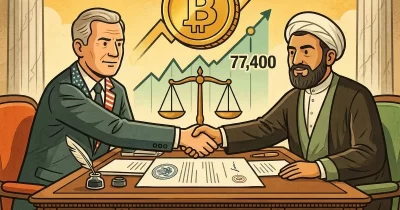
The regulatory landscape for cryptocurrencies and other digital assets could shift depending on the outcome. A U.S.-Iran deal — or a conflict — would reshape how governments treat cross-border financial flows, particularly those that bypass traditional banking.
Iran has used bitcoin mining to earn foreign currency under sanctions. A deal might bring those operations into formal channels, subjecting them to new rules. A conflict could prompt the U.S. Treasury to expand sanctions enforcement, possibly targeting crypto wallets or exchanges that facilitate Iranian transactions.
Lawmakers in Washington have already introduced bills to tighten oversight of digital assets linked to sanctioned states. Any escalation with Iran would likely accelerate that legislation.
The Supreme Leader’s decision is the pivot point. Until it comes, the U.S. military posture, oil traders’ hedging strategies, and crypto regulators’ contingency plans all remain in limbo.