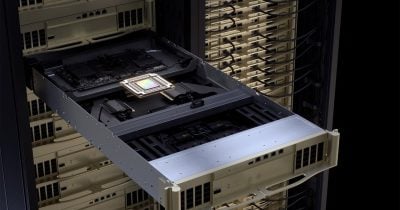
AMD is set to take the wraps off its MI350 GPUs at the Advancing AI 2026 summit this month, a direct challenge to Nvidia's AI chip empire. The new processors pack 288 GB of memory — and they could have knock-on effects for crypto mining and blockchain compute.
What the MI350 brings
The MI350 is AMD's latest push into the high-end GPU market. With 288 GB of memory, it's built to handle the largest AI models — think training and inference for massive neural networks. That same memory capacity makes it attractive for certain crypto workloads, particularly those that require heavy parallel processing or memory-intensive operations like zero-knowledge proof generation.
AMD has been pushing its ROCm software stack as an alternative to Nvidia's CUDA, and the MI350 will be a key test of whether developers are willing to switch. The summit, expected later this month, will include technical sessions and partner announcements aimed at building momentum.
Crypto compute angle
For the crypto world, the MI350's arrival is worth watching. While ASICs dominate Bitcoin mining, GPUs remain essential for altcoin mining, decentralized AI projects, and proof-of-work coins that resist ASICs. Nvidia's stranglehold on the GPU market has meant high prices and limited supply for miners. AMD's MI350 could offer an alternative — if the software support is there.
The 288 GB memory is overkill for most mining algorithms, but it opens the door for more complex computations. Some blockchain projects are exploring AI integration, and a GPU that can handle both AI and crypto workloads might find a niche. Still, AMD has a long road ahead to match Nvidia's ecosystem.
The Advancing AI 2026 summit kicks off later this month. AMD is expected to provide pricing, availability, and benchmark data for the MI350. Developers and miners alike will be watching to see if the chip can deliver on its promises — and whether AMD can finally break Nvidia's grip on the high-performance GPU market.