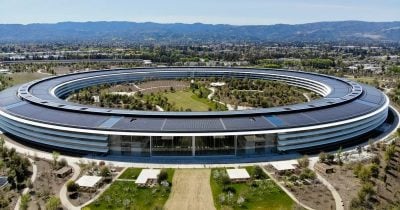
Microsoft has warned that delays connecting new data centers to the UK power grid could stretch to eight years, putting a planned $3.2 billion investment at risk. The company said the bottleneck threatens not just its own expansion but broader tech growth, clean energy pledges, and the pace of AI development in Britain.
The $3.2 billion question
Microsoft’s investment, announced last year, was meant to double its UK data center capacity. But the company now says grid connection queues are so long that the project may not come online until the early 2030s. That timeline clashes with the company’s own sustainability goals and its need for reliable, low-carbon power to run the energy-hungry servers behind services like Azure and OpenAI.
The warning comes as the UK government pushes to attract more tech infrastructure, touting its net-zero electricity grid by 2035. Microsoft’s statement suggests that ambition and reality are far apart.
Why grid delays are a bottleneck
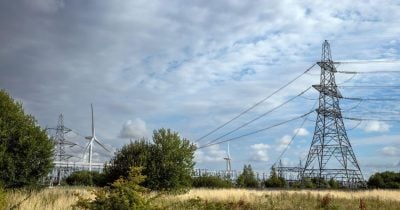
Britain’s electricity grid operator, National Grid ESO, has a backlog of projects waiting for connection approvals. Some renewable energy farms already face waits of five to ten years. For a hyperscale data center, the situation is similar. Microsoft says the current process is “not fit for purpose” and needs urgent reform.
The company isn’t alone. Other tech firms and industrial users have complained that the queue system, which works on a first-come, first-served basis, doesn’t prioritize projects that are ready to build or that support national priorities like AI and clean energy. Without faster connections, Microsoft argues, the UK risks losing investment to countries with more streamlined permitting.
AI and clean energy caught in the crossfire
Data centers are the physical backbone of artificial intelligence. Training large language models and running inference requires enormous computing power, which in turn demands a stable, high-capacity electricity supply. If Microsoft can’t get that power in the UK, it may shift AI workloads to other regions.
That would be a blow to the government’s ambition to make Britain a global AI hub. It also complicates Microsoft’s own climate pledges. The company has committed to being carbon-negative by 2030 and has signed power purchase agreements for renewable energy. But if it can’t connect those renewables to its data centers, the math doesn’t add up.
The grid delays also affect other tech companies. Amazon, Google, and Oracle have all expanded UK data center capacity in recent years, and they face similar connection hurdles. The problem is systemic.
What happens next
Microsoft has not said it will pull the investment, but the warning is clear: fix the grid or lose the business. The UK’s energy regulator, Ofgem, and the government are reviewing connection rules, but reforms take time. For now, the clock is ticking on a $3.2 billion bet that depends on electrons moving faster than bureaucracy.