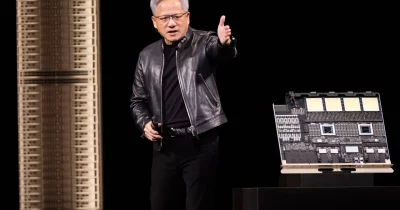
The GTC Taipei Keynote
Huang is scheduled to speak at the event, which brings together developers, partners, and customers. The keynote is expected to focus on Nvidia's latest hardware and software advances in AI computing. But it's also a chance for the company to reaffirm its ties to Taiwan's chip manufacturing ecosystem — a relationship that has become increasingly important as demand for AI chips surges.
Nvidia's strategic presence in Taiwan isn't just about marketing. The company relies heavily on Taiwanese foundries, including TSMC, to produce its most advanced processors. Huang's appearance signals that Nvidia sees Taiwan as a vital part of its long-term supply chain strategy.
Why Taiwan Matters for AI Chips
Taiwan produces the vast majority of the world's most advanced semiconductors. From smartphones to supercomputers, the chips that drive modern technology often start life in Taiwanese fabrication plants. For Nvidia, that dependence is especially acute. Its H100 and upcoming Blackwell GPUs are manufactured in Taiwan, making the island a critical node in the AI supply chain.
The island's semiconductor industry has been a cornerstone of the global tech economy for decades. For Nvidia, Taiwan isn't just a manufacturing base — it's also a hub for talent and innovation. Many of the company's engineering and design partners are based in Taiwan.
The company's emphasis on its presence in Taiwan comes at a time when geopolitics are testing the resilience of global semiconductor networks. Huang's keynote is likely to address how Nvidia plans to manage those risks while continuing to push the boundaries of AI performance.
Supply Chain Pressures and Global Competition
The race to dominate AI has turned semiconductor supply chains into a strategic asset. Countries and companies are scrambling