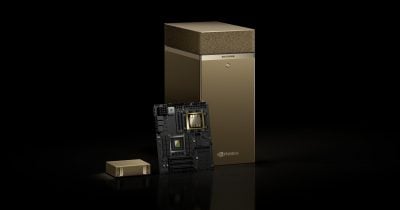
Nvidia has introduced the BlueField-4 STX, a chip designed to handle AI storage processing without direct host intervention. The processor integrates security directly into the silicon, a move the company believes could shift how data centers manage the growing demands of artificial intelligence workloads.
What the BlueField-4 STX does
The BlueField-4 STX is built for autonomous operation. It processes storage tasks related to AI independently, offloading work from central processors. Nvidia says the chip includes in-silicon security features, meaning protection against threats is baked into the hardware rather than added as a separate layer. That combination of autonomy and built-in security is the chip's core pitch.
For data centers running AI models, storage has become a bottleneck. Moving large datasets between storage and compute consumes time and power. The BlueField-4 STX aims to cut that overhead by handling storage processing on its own, freeing up CPU cycles for other tasks.
Addressing energy constraints
Data center energy use is a growing concern, especially as AI models grow larger. The BlueField-4 STX could help ease that pressure. Nvidia claims the chip improves energy efficiency by reducing the number of trips data has to make between storage and processing units. That directly tackles one of the biggest costs in modern data centers: electricity.
The chip's in-silicon security also means fewer separate security processors, which can further reduce power draw. For operators under pressure to meet sustainability targets, that's a significant selling point.
Impact on AI data processing
Beyond energy, the BlueField-4 STX could boost scalability. Because it handles storage autonomously, adding more storage doesn't require as much reconfiguration of the compute layer. That makes it easier to expand AI infrastructure without major overhauls.
Efficiency gains could also cut costs. Less time waiting for data means faster model training and inference. For companies racing to deploy AI, that speed translates into competitive advantage.
The chip enters a market where Nvidia already dominates AI compute with its GPU lineup. The BlueField-4 STX extends that reach into the storage side, potentially giving Nvidia a tighter grip on the entire AI pipeline.
Pricing and availability haven't been announced. Data center operators will be watching for integration details and real-world benchmarks once the chip reaches customers.