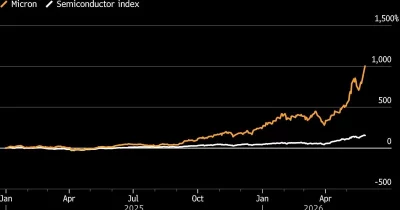
South Korea's exports are set to rise for the 12th straight month, powered by a semiconductor surge that is reshaping global trade patterns. The sustained growth signals a broader shift — one tied directly to the world's accelerating investment in artificial intelligence infrastructure.
Chips as the engine
Semiconductors account for a growing share of South Korea's outbound shipments. Memory chips, in particular, have seen orders climb as data centers and AI servers require ever more processing power. The country's export data shows a clear correlation: every time AI-related spending ticks up, chip exports follow.
That link is not accidental. South Korea is home to Samsung Electronics and SK Hynix, two of the world's largest memory chip makers. While neither company is named in the latest trade figures, their production lines are running near capacity to meet global demand. The result is a steady stream of exports that has now stretched into a full year of growth.
Global trade in flux
The semiconductor-driven export boom is not just a South Korean story. It is redrawing trade routes and shifting the balance of supply chains. Countries that import chips — from the United States to Vietnam — are seeing their own industrial output depend more heavily on a steady flow of Korean-made components.
At the same time, traditional export categories like automobiles and consumer electronics have ceded ground to semiconductors in the national trade ledger. The change reflects a broader transformation: the digital economy now runs on chips, and the countries that make them wield outsized influence.
What the numbers say about AI
Rising semiconductor exports are one of the clearest signals yet that global investment in AI infrastructure is not just talk. Tech giants and cloud providers are building out data centers at a record pace, and each new facility requires billions of dollars worth of memory and logic chips.
South Korea's export data offers a real-time window into that spending. When chip shipments go up, it means someone, somewhere is buying hardware to train or run AI models. The current streak suggests that spending is accelerating, not slowing.
The question now is how long the run can last. AI investment cycles are notoriously volatile — a single policy shift or corporate earnings miss can slow orders. For now, the trend is clear: South Korea's factories are busy, its ports are full, and the world's appetite for chips shows no sign of easing.