The company behind the USDT stablecoin has released a publicly available version of a Google-developed tool designed to shrink the memory footprint of artificial intelligence models. Tether said the open-source adaptation of Google's TurboQuant aims to help developers run larger AI workloads on existing hardware without requiring new infrastructure.
What TurboQuant does
Quantization is a method that reduces the precision of the numbers a model uses, making it lighter and faster. Google originally built TurboQuant to optimize its own AI runs. Tether's version takes that work and makes it accessible to outside developers, removing the need for licenses or internal Google access. The code is now on GitHub for anyone to download and modify.
Why Tether is involved
The stablecoin issuer has been pushing deeper into AI infrastructure over the past year. Last summer it launched a division focused on peer-to-peer AI models. The open-source release of TurboQuant fits that broader shift: instead of keeping the optimization private, Tether is contributing a tool that could lower memory costs for the whole field.
Memory savings and hardware limits
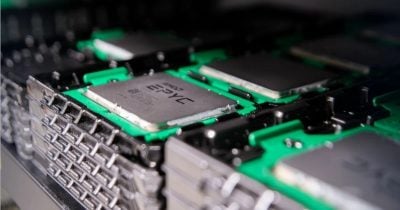
Large language models and image generators often eat up gigabytes of video RAM, forcing teams to buy expensive GPUs. By quantizing the models, TurboQuant cuts that demand. The exact percentage of memory saved wasn't disclosed, but the technique typically halves the size of the weight matrices that store a model's parameters.
The release is code-only, with no pre-trained models attached. Developers will need to apply TurboQuant to their own neural networks. Tether provided documentation and examples for common frameworks such as PyTorch and TensorFlow.
What's available now
The repository is live on GitHub under an Apache 2.0 license. That means anyone can use it for commercial projects, modify it, or redistribute it. Tether hasn't announced any updates or patches yet. The version published is the initial open-source cut.