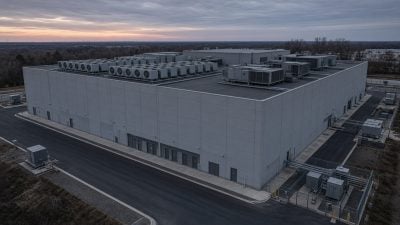
The United Arab Emirates has secured broader access to US advanced AI chips after assisting Washington in the Iran war, a deal that lets the Gulf state's flagship AI firm G42 buy freely for at least nine months. G42 also plans to become a US company. The arrangement deepens the US-UAE strategic alliance in AI but carries a contrarian message for crypto markets: this is a centralization win, not a tailwind for decentralized AI tokens.
What the deal gives G42
G42, the UAE's main AI player, can now purchase US chips — likely including Nvidia's H100 and upcoming B200 — without the usual export license hurdles. The nine-month unrestricted window lets the firm stockpile hardware before any potential policy shift. The company's plan to reincorporate in the US is a regulatory arbitrage move: it shields G42 from future export controls by becoming a domestic entity. Other foreign AI firms may follow suit, funneling more AI development under US jurisdiction.
📊 Market Data Snapshot
Why crypto traders should look twice
On the surface, this could seem bullish for AI-related tokens like FET, AGIX, or Render. More chips mean more AI infrastructure, and more infrastructure could mean more demand for decentralized compute networks. But the market is currently driven by macro fear — Bitcoin dominance is high, altcoins are underperforming, and the Fear & Greed index sits at 25 (Extreme Fear). Any AI token pump from this news is likely to be short-lived and small, maybe 3-5% if risk appetite improves.
The deeper issue is structural. This deal cements US government control over advanced AI hardware. G42's US incorporation further centralizes AI development under American oversight. That directly undermines the core pitch of decentralized AI projects: censorship resistance and open access. If the most powerful AI chips are locked inside US-incorporated entities, the promise of a permissionless AI future gets harder to sell.
The contrarian case: rotate into Bitcoin
Smart money may see this as a reason to rotate out of AI tokens and into Bitcoin. Bitcoin remains the only truly decentralized asset — no government can reincorporate it, no export control can restrict its nodes. The UAE chip deal reinforces state-controlled AI infrastructure, making decentralized alternatives less viable and less attractive to institutional investors. For traders, the near-term play is to watch for any follow-up announcements about G42's US listing or partnerships with US tech firms. If those come, AI tokens could see a brief rally — but the underlying trend is toward centralization, not away from it.
What happens next
G42's nine-month chip access window starts now. The firm will likely stockpile aggressively, creating a centralized compute surplus that could temporarily depress GPU rental prices on cloud platforms. That might actually boost demand for decentralized compute networks like Akash and Render as a hedge against single-point-of-control risk — a paradox the market hasn't priced in. The next concrete milestone is G42's US incorporation filing, which could come within weeks. If it triggers a wave of similar moves by other foreign AI firms, the crypto-AI narrative will need a serious rewrite.