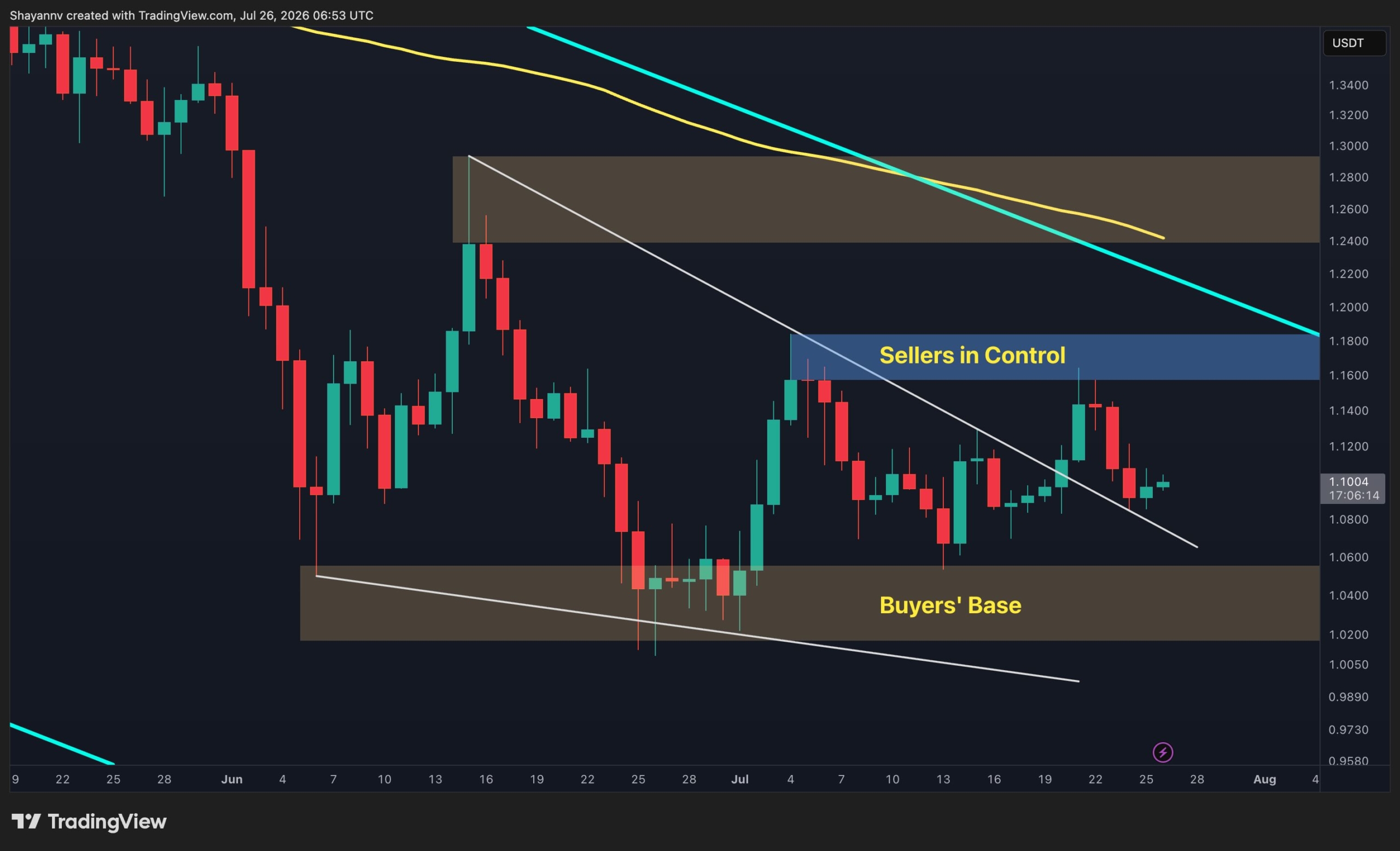
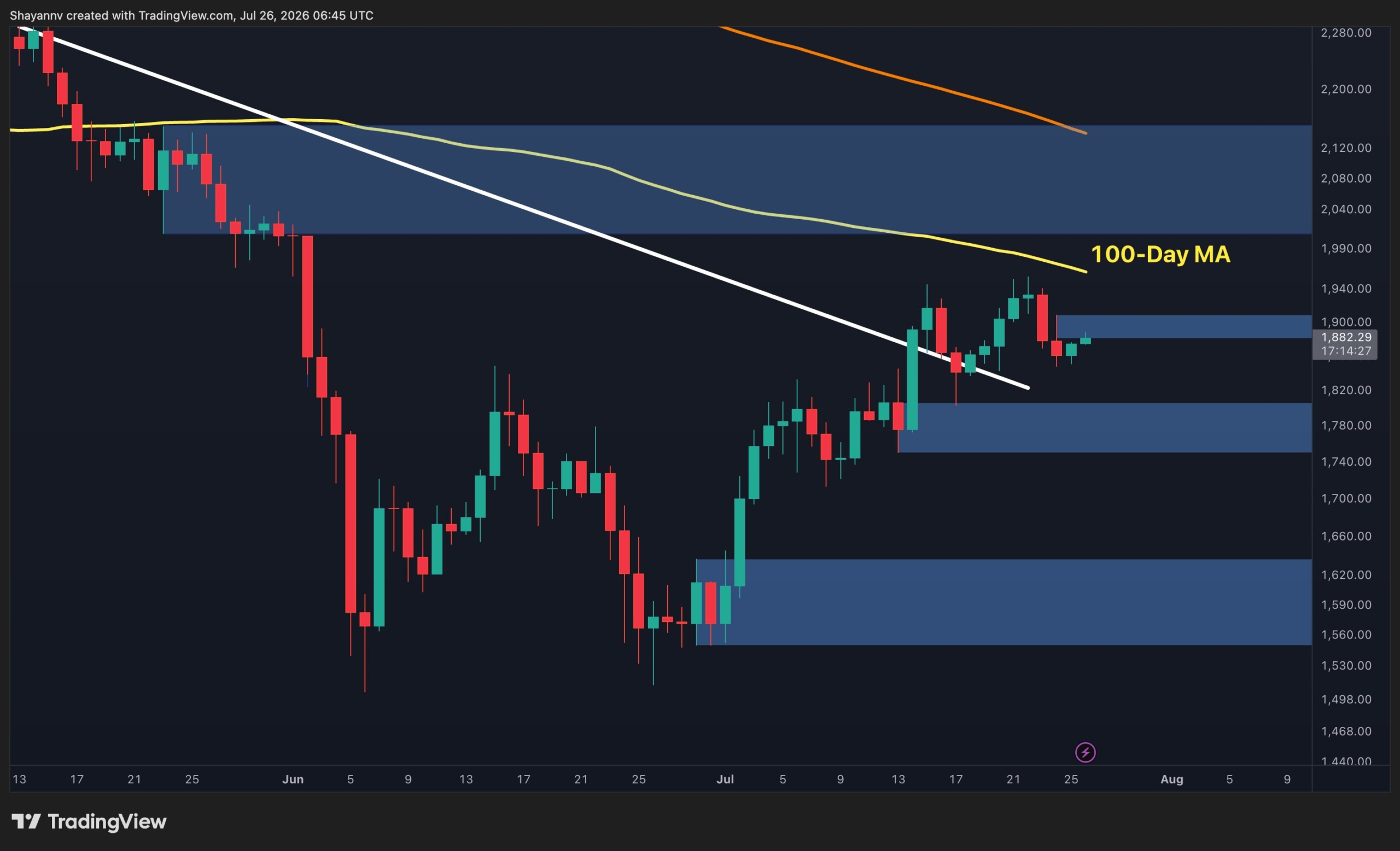
The combined market cap of Dogecoin and Shiba Inu has fallen to its lowest point in three years, now representing a tiny fraction of Bitcoin's value. But that doesn't mean the meme coin craze is over. Instead, liquidity has migrated to new venues and rails, with tokenized equities and new L2s like Robinhood Chain absorbing the action.
DOGE and SHIB hit a three-year low
The two largest meme coins by market cap have seen their combined valuation shrink dramatically. They now account for just over 1% of Bitcoin's market share — a far cry from the heights of the 2021 bull run. The decline reflects a broader shift in where retail and institutional money is flowing.
Tokenized equities steal the spotlight
In June, trading volume in tokenized equities hit a record high, pulling liquidity and attention away from memecoins. Institutions are rotating into these assets, which offer exposure to traditional stocks on-chain. The ETF-driven flow concentration in BTC and ETH during US hours has made small-cap trades feel thinner and more binary, further squeezing meme coin activity.
Inside the BonkDAO governance attack
BonkDAO, the decentralized autonomous organization behind the Solana-based meme coin BONK, suffered a governance attack this month. An attacker acquired just over 1% of the token supply to pass a malicious proposal, draining a significant amount of funds from the DAO's treasury. The incident highlights the risks of low-vote-threshold governance in meme coin communities.
Memecoins find new rails
Despite the downturn for the old guard, memecoins are far from dead. Robinhood Chain, a new L2, reportedly processes hundreds of millions of dollars per day in DEX volume, mostly memecoins. New small-cap memecoins can still experience rapid price surges with minimal capital, but they also crash just as quickly. The action has fragmented across chains, making it harder to track but no less frenetic.
The question now is whether the institutional rotation into tokenized equities will continue, or if memecoins will reclaim their dominance on these new chains.