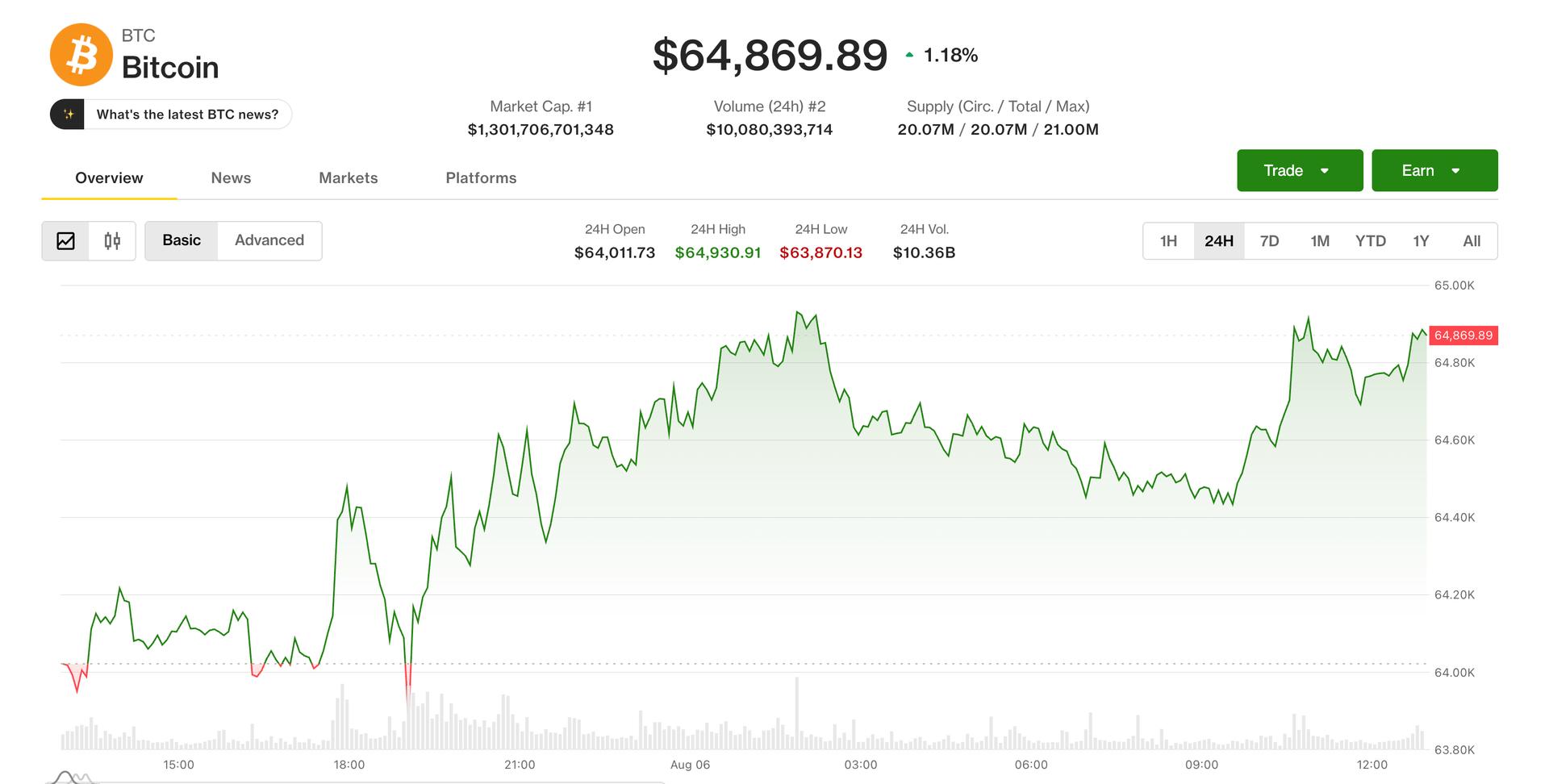
The S&P 500 has tacked on roughly the entire market capitalization of all cryptocurrencies combined this month — while Bitcoin, the largest digital asset, has barely moved.
The divergence is stark. Through the first week of August, the benchmark U.S. stock index has rallied on strong corporate earnings and a surprisingly resilient labor market. Meanwhile, Bitcoin has traded in a narrow range, failing to capture any of the risk-on enthusiasm that has lifted equities.
The scale of the gap
To put it in perspective: the total crypto market cap is roughly $2.2 trillion as of early August. The S&P 500 has added about that same amount in value since July 31. That means the entire digital-asset ecosystem has been matched by just one month of gains in traditional stocks.
Bitcoin itself has been the laggard. The largest cryptocurrency by market value has traded between $58,000 and $62,000 for most of the month, a range that represents a gain of less than 1% from where it started August. That's a far cry from the double-digit percentage moves that have characterized past crypto bull runs.
What's driving the split
The S&P 500's surge has been broad-based, with technology and financial stocks leading the way. Investors have shrugged off lingering inflation concerns and instead focused on a soft-landing narrative for the U.S. economy.
Crypto, by contrast, has been stuck in a holding pattern. Regulatory uncertainty in the U.S. and Europe continues to hang over the market. The SEC has yet to approve a spot Bitcoin ETF for a major exchange, and the European Union's Markets in Crypto-Assets regulation, while now in effect, has created compliance headaches for smaller firms.
There's also the matter of liquidity. Trading volumes on major exchanges have been declining since the spring, and on-chain data shows that long-term holders are sitting on their coins rather than adding to positions. Without fresh demand, Bitcoin has struggled to break out.
The crypto industry has long pitched itself as a hedge against traditional market risks — inflation, currency debasement, centralized control. But this month, the S&P 500 is doing exactly what crypto is supposed to do: delivering gains. That's a hard sell for the 'digital gold' thesis.
Bitcoin's lack of movement also raises questions about whether the asset has become just another risk-on bet that happens to be underperforming. If stocks keep climbing and Bitcoin stays flat, the argument that crypto is a separate asset class with its own drivers gets harder to make.
None of this means crypto is dead. The market has seen similar stretches before — long periods of sideways trading followed by explosive moves. But for now, the action is all in equities, and Bitcoin is watching from the sidelines.
The next test comes later this month when the Federal Reserve releases minutes from its July meeting. If the central bank signals it's done raising rates, that could reignite risk appetite across the board — and maybe finally give Bitcoin a reason to move.