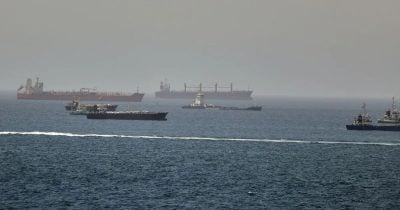
Iran has moved to block the Strait of Hormuz, shutting down commercial vessel transit through one of the world's most critical maritime chokepoints. The move, confirmed by industry sources, immediately halted all cargo and tanker traffic in the narrow waterway, sending shockwaves through energy markets and supply chains.
A vital artery for global energy
The Strait of Hormuz connects the Persian Gulf to the Arabian Sea. Roughly 20 million barrels of oil pass through it each day — about a fifth of the world's petroleum consumption. That flow has now been cut off. The blockade isn't just a disruption to crude shipments; it also affects liquefied natural gas, refined products, and containerized goods moving between the Gulf states and Asia, Europe, and Africa.
Traders and shipping executives had been bracing for something like this. Tensions between Iran and Western nations have been rising for weeks. But few expected a full, immediate halt. The Strait has seen skirmishes and temporary interruptions before, but nothing on this scale since the Iran-Iraq war in the 1980s.
Market jitters and economic fallout
Oil prices shot up within hours of the announcement. Benchmark crude surged past $95 a barrel, and analysts expect further increases if the blockade holds. Stock markets in Asia and Europe opened lower, with energy and shipping stocks swinging wildly. Insurance rates for vessels still in the region have skyrocketed, and several shipping lines have already declared force majeure on Gulf contracts.
The economic effects won't be limited to the energy sector. Container ships carrying electronics, food, and industrial components are now stuck or rerouting around Africa. That adds weeks to delivery times and pushes up costs for importers. Countries like Japan, India, and South Korea — heavily dependent on Gulf oil — are particularly exposed. They've started emergency talks with suppliers and with the United States.
Geopolitical lines harden
Iran's government framed the blockade as a response to what it calls hostile actions by the U.S. and its allies. The U.S. Navy's Fifth Fleet, based in Bahrain, has not yet announced a military response, but officials described the situation as “unacceptable” in background briefings. The United Nations Security Council is expected to hold an emergency session within 48 hours.
Neighboring Gulf states are caught in the middle. Saudi Arabia, the United Arab Emirates, and Iraq rely on the Strait for almost all their oil exports. Their coast guards and navies are on alert, but none have directly challenged the blockade. Qatar, the world's largest LNG exporter, has seen its gas shipments grind to a halt.
What comes next
The immediate question is how long Iran can sustain the blockade — and what the international response will be. Naval convoys, diplomatic pressure, or even a counter-blockade are all possible. But for now, tankers sit idle off the coast of Fujairah, waiting. Shipping schedules are being rewritten in real time. And businesses around the world are starting to calculate the cost of a bottleneck that nobody can afford to leave closed.