Qatar publicly condemned an attack by Iran on the United Arab Emirates on Tuesday, a move that analysts see as part of a broader effort to mend ties and strengthen unity among Gulf Arab states. The statement, issued by Qatar's foreign ministry, did not provide details on the nature of the assault but expressed solidarity with the UAE and called for restraint.
Why the condemnation matters now
The rebuke comes at a time when Gulf nations are working to overcome years of internal rifts. Qatar's relations with the UAE, Saudi Arabia, Bahrain, and Egypt were severed in 2017 over allegations that Doha supported terrorism and cozyed up to Iran—accusations Qatar has always denied. A reconciliation deal signed in early 2021 reopened borders and normalized diplomatic ties, but trust remains fragile.
By taking a clear stand against Iran, Qatar is signaling that it prioritizes regional security over any lingering alignment with Tehran. The attack—whose scale and target haven't been disclosed—risks inflaming tensions across the Gulf, where Iran's ballistic missile program and support for proxies have long been flashpoints.
What the condemnation says about Gulf dynamics
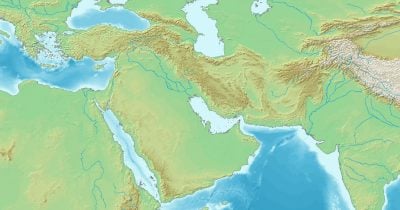
Public statements of solidarity like this one are rare. For years, Qatar avoided directly criticizing Iran, partly because of shared natural gas fields in the Persian Gulf and partly as a counterweight to Saudi and Emirati influence. That calculation appears to be shifting.
The UAE itself has pursued its own diplomatic openings with Iran, including reopening its embassy in Tehran in 2022. But cross-border attacks—whether by drones, missiles, or proxies—test those overtures. Qatar's quick condemnation shows that even states with competing interests will close ranks when one of their own is hit.
No clear picture of the attack
Neither the UAE nor Iran has provided full details. Iranian state media denied any involvement, while Emirati officials have not publicly blamed Tehran directly. Still, Qatar's unequivocal language suggests behind-the-scenes intelligence pointed to Iranian responsibility.
The lack of specifics leaves room for interpretation. Some Gulf observers wonder whether the attack was a one-off provocation by hardline factions inside Iran or a deliberate signal from the government itself. Either way, Qatar's rebuke makes it harder for Iran to claim it enjoys unified backing in the region.
What comes next
The Gulf Cooperation Council is scheduled to hold a ministerial meeting next week, where the attack and Qatar's condemnation are expected to dominate discussions. Member states will likely coordinate a joint response, though public divisions could still surface. For now, Doha has drawn a line in the sand—one that may reshape its relationship with Iran and its neighbors for years to come.