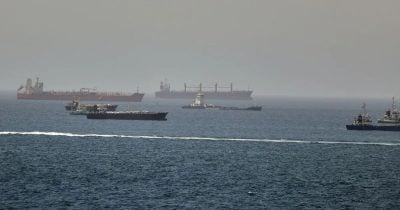
The Strait of Hormuz remains effectively shut down as the standoff between Washington and Tehran escalates, threatening to upend global oil flows and further strain already fragile diplomatic channels. The blockade, now in its fourth day, has drawn fresh warnings from both sides but no apparent path to de-escalation.
Why the blockade matters
Roughly a fifth of the world’s petroleum passes through the narrow waterway separating Iran and Oman. With the blockade still in place, tankers carrying crude from Saudi Arabia, Iraq, Kuwait, and the United Arab Emirates are unable to transit. Global benchmark Brent crude jumped more than 5 percent on Monday, though no official price figures were released by exchanges. The longer the blockade lasts, the more pressure it puts on importing nations in Asia and Europe, which rely heavily on Gulf oil.
Iran has not formally declared a blockade, but military activity near the strait has made passage effectively impossible. The US Navy’s Fifth Fleet, based in Bahrain, said it is monitoring the situation but has not attempted to force a transit. No official from either country has publicly commented on the status of negotiations.
What’s at stake for diplomacy
The timing could not be worse for ongoing efforts to revive the 2015 nuclear deal. Indirect talks between American and Iranian officials had shown small signs of progress in recent weeks. Now those talks are effectively frozen. Neither side has requested a new round of meetings, and European mediators have been largely silent. The blockade complicates any diplomatic reset — the US would likely demand its removal as a precondition, while Tehran may treat it as leverage.
Regional players are also watching closely. Saudi Arabia has not issued a public statement, but its energy minister was reported to be in emergency consultations with Gulf allies. The United Arab Emirates has diverted some tankers to longer routes around Africa, adding weeks to delivery times and increasing shipping costs.
Geopolitical risks beyond oil
A prolonged closure of the strait does not just affect pump prices. It heightens the risk of miscalculation at sea. A US destroyer and several Iranian fast-attack craft have operated within visual range of each other in recent days without incident, but the margin for error is thin. Analysts have warned that a single collision or warning shot could spiral into a broader conflict.
Meanwhile, Iran’s proxies in Yemen, Iraq, and Lebanon have issued statements supporting the blockade, though none have taken direct action. The US has not publicly threatened a military response, but President Joe Biden earlier this week said the US would “respond appropriately” to any disruption of international shipping — a phrase that leaves room for interpretation.
The blockade also tests the limits of international maritime law. The Strait of Hormuz is technically an international waterway, but Iran has long asserted the right to inspect vessels under its jurisdiction. No United Nations Security Council meeting has been scheduled to address the situation.
The unresolved question
Neither Washington nor Tehran has set a deadline for talks or announced any unilateral step to ease the standoff. The next few days will show whether either side is willing to blink — or whether the world’s most critical oil chokepoint stays shut for the foreseeable future.