The Trump administration is leaning on tariffs as a lever in the standoff with Iran, but the economic squeeze arrives as the U.S. military works through a serious munitions shortage. The pairing of these pressures could stretch the crisis out, complicate any diplomatic path, and rattle markets already on edge.
The Arsenal Gap
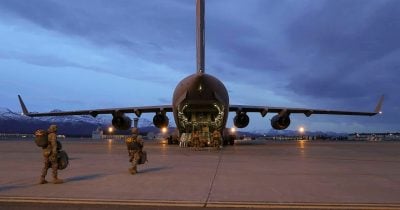
U.S. military planners are navigating the standoff with a thinner stockpile of munitions than they'd want. The shortage isn't new, but it's become a sharper constraint as the confrontation with Iran grinds on. For a military that has leaned heavily on precision weapons in recent conflicts, the limited supply narrows the range of options available to commanders. That doesn't mean the military is unable to act, but it does mean every strike, every response, gets weighed against what's left in the magazines.
This is the backdrop for a policy that relies on economic force. The tariffs, aimed at pressuring Iran, are meant to weaken its economy. But they also have a way of feeding the standoff. The longer the economic measures stay in place, the more the confrontation risks becoming a war of attrition, with each side waiting for the other to blink.
Tariffs as a Double-Edged Lever
Tariffs are, in theory, a way to apply pressure without firing a shot. They hit the Iranian economy, but they also hit global markets and the U.S. economy itself. Market stability is already fragile, and the threat of prolonged tariffs can scare investors, push up prices, and complicate the calculation for both Washington and Tehran.
The bigger risk is that the tariffs become a reason to keep the standoff going. If either side reads the other as not feeling enough pain, they can hold out longer, waiting for the other side to cave. That dynamic is exactly what prolongs a confrontation. And with the military constrained by the munitions shortage, there’s no easy way to break the cycle with force alone.
Diplomacy in the Shadow of Economic Pressure
Diplomacy, in this climate, gets harder. The tariffs are a public signal of America’s intent, but they also give Iranian leaders a reason to hold firm. Economic pressure can be framed as an attack, making it politically difficult for the other side to come to the table. The administration has to weigh whether the leverage gained from the tariffs is worth the added difficulty of getting to negotiations.
At the same time, the munitions shortage is a silent factor in that calculus. A military that knows it has limited stockpiles may be less eager to escalate, but that restraint could be mistaken for weakness. It’s a delicate balance, and no one is saying it out loud, but the constraint is real.
For now, the standoff continues. The tariffs remain in place, the military juggles its stockpiles, and the question is whether the economic pressure will break the impasse or simply extend it. The answer will shape not just the relationship with Iran, but the stability of the global market in the coming months.