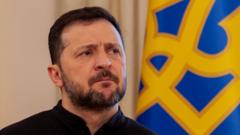
Iuliia Mendel, who served as press secretary for Ukrainian President Volodymyr Zelensky, has publicly accused her former boss of standing in the way of a peace settlement and of presiding over an administration where corruption goes underreported. In a series of statements, Mendel described Zelensky's leadership as emotionally erratic and said the gap between his war-hero image and the reality of internal manipulation is damaging Ukraine's relationship with international backers.
A former insider's accusations
Mendel did not hold back. She said the president himself is a major obstacle to any negotiated end to the war with Russia — a charge that cuts against the official narrative in Kyiv, where Zelensky is cast as the unwavering defender of national sovereignty. The former spokesperson also claimed that Zelensky's personal style creates emotional instability at the top of the government, making coherent decision-making difficult.
Those are serious allegations from someone who once stood at the president's side, handling media and messaging. Mendel left the administration in 2021, before the full-scale invasion, but her comments now add a layer of internal criticism to the external pressures Ukraine already faces.
Underreported corruption and waning support
Perhaps the most pointed part of Mendel's critique concerns money and trust. She alleged that corruption inside Zelensky's circle has been systematically underreported — both to the Ukrainian public and to foreign donors. That, she argued, complicates the country's ability to maintain the steady flow of military and financial aid it needs to keep fighting.
Western governments have long pressed Ukraine to show progress on anti-corruption reforms, and any suggestion that the problem is being hidden rather than tackled could erode confidence in Kyiv. Mendel's statements land at a moment when some allies are already questioning the scale and duration of their support.
The hero image versus the inside story
Zelensky's wartime performance has earned him global admiration. But Mendel's claims drive a wedge between that public perception and what she portrays as a less heroic reality. She described a leadership culture that tolerates manipulation and resists transparency, even as the president appears on world stages asking for more help.
The clash — heroism abroad, alleged dysfunction at home — is not new to Ukrainian politics, but it carries extra weight when voiced by a former spokesperson. Mendel was the one who often shaped the very image she now says is misleading.
Zelensky's office has not yet responded to the allegations. The claims are likely to reignite debate in Ukraine and among its partners about whether the country's leadership is as unified and clean as it projects.