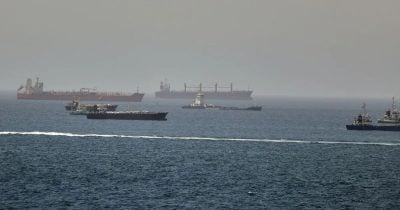
Iran's Islamic Revolutionary Guard Corps (IRGC) issued a formal warning to the United States on Tuesday against any military intervention in the Strait of Hormuz, escalating a standoff that has been simmering for weeks. The warning comes as the region faces a rising risk of outright conflict — a scenario that would choke off roughly a fifth of the world's oil supply and send shockwaves through global financial markets, including crypto.
What the IRGC said
In a statement carried by state media, the IRGC said it would view any American military move in the strategic waterway as a direct act of aggression. The U.S. has recently increased naval patrols in the Persian Gulf, and Iranian officials have repeatedly threatened to close the strait if oil exports are blocked. The current rhetoric is the most confrontational since the 2019 drone attacks on Saudi Aramco facilities.
Oil chokepoint risk
The Strait of Hormuz is the narrow passage between Oman and Iran that handles about 20% of the world's petroleum transit. Any disruption — whether from mines, missile strikes, or an outright blockade — would spike crude prices overnight. A sustained closure could push oil above $150 a barrel, according to historical stress models. That kind of price shock typically triggers a flight to safety, with investors dumping equities and speculative assets in favor of gold and U.S. Treasuries.
Why crypto traders are watching
Bitcoin and other digital assets have increasingly correlated with risk-on trading patterns over the past two years. A sharp oil-driven selloff in stocks would likely pull crypto lower, at least in the short term. Traders are also watching for any signs that Iran might use crypto to bypass sanctions if the situation deteriorates — something the IRGC has experimented with in the past. That dynamic cuts both ways: tighter sanctions could push more Iranian activity onto decentralized exchanges, but it could also trigger a regulatory crackdown.
What happens next
Neither Washington nor Tehran has signaled a willingness to de-escalate. The U.S. Fifth Fleet, based in Bahrain, has not altered its posture publicly. The next concrete milestone is a scheduled United Nations Security Council meeting later this week, where Russia and China are expected to block any resolution targeting Iran. For crypto markets, the watchword is volatility — and the next headline out of the Gulf could hit as hard as any Fed decision.